
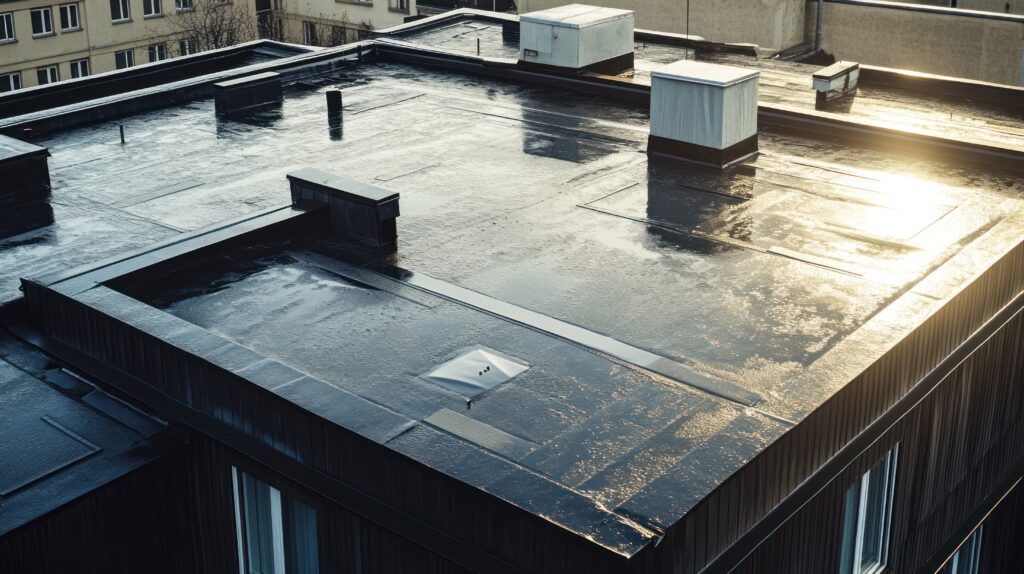
Flat roofing systems, commonly found on commercial properties and modern residential homes, present a unique set of challenges compared to steep-slope roofs. Since water drains slowly, the integrity of the material and the sealing of the seams are paramount. The choice of system—from modern single-ply membranes to traditional built-up styles—depends on the building’s usage, sun exposure, and long-term budget.
Masterpiece Roofing specializes in the installation of all major flat roof technologies, providing tailored recommendations based on superior performance and lifecycle cost.
Common Flat Roof Systems Compared
Flat roof systems fall primarily into two categories: single-ply membranes (TPO, EPDM, PVC) and multi-layer built-up systems (Modified Bitumen).
TPO (Thermoplastic Polyolefin) — Durability, Reflectivity
TPO is the fastest-growing flat roofing material due to its balance of performance and price.
- Key Features: Highly reflective (often white or light gray), making it an excellent “cool roof” option for energy efficiency. Seams are heat-welded, creating a bond as strong as the membrane itself.
- Best For: Energy-conscious building owners and roofs exposed to high UV radiation.
EPDM (Rubber) — Cost-Effective, Many Accessories
Ethylene Propylene Diene Monomer (EPDM) is a durable, synthetic rubber membrane.
- Key Features: Typically black, offering superior UV resistance and excellent elasticity for areas with large temperature swings. It is the most cost-effective membrane initially.
- Best For: Budget-sensitive projects and areas with extreme freeze/thaw cycles.
PVC (Polyvinyl Chloride) — Premium Durability, Fire Resistance
PVC is a high-performance, premium single-ply membrane.
- Key Features: Exceptional resistance to chemical and grease exposure (unlike TPO/EPDM). It offers superior fire resistance and tear strength. Like TPO, seams are heat-welded.
- Best For: Restaurants, industrial buildings, or roofs that vent significant grease or chemical fumes.
Modified Bitumen — Traditional Built-Up Style
This system consists of layers of asphalt reinforced with polymer modifiers, applied in rolls.
- Key Features: Excellent waterproofing through multiple layers, often applied by torch (dangerous), hot asphalt, or cold adhesives. Provides high puncture resistance.
- Best For: Structures where high puncture resistance is a priority or where the aesthetic of a mineral granule cap sheet is preferred.
Key Selection Criteria
The “best” system is the one that best matches the environmental and usage profile of the building.
Climate and Exposure (UV, Wind)
- Hot Climates: TPO and PVC (in white or light colors) are ideal due to their high solar reflectance index (SRI), significantly lowering cooling costs.
- High Winds: Heat-welded membranes (TPO, PVC) generally offer superior seam integrity and adhesion compared to the taped seams of EPDM, providing better resistance to wind uplift.
Building Usage (Commercial, Residential)
- Residential: TPO is often favored for residential flat roofs (garage, porch, deck areas) for its aesthetic clean look and energy efficiency.
- Commercial (Heavy Use): PVC is the choice for commercial roofs expecting heavy foot traffic or exposed to exhaust (like mechanical units or restaurants).
Budget and Lifecycle Cost
While EPDM may have the lowest upfront material cost, TPO and PVC often boast longer lifespans (20+ years vs. 15–20 years for EPDM), reducing the long-term cost of ownership (lifecycle cost). Modified Bitumen costs fall between single-ply membranes and premium systems.
Installation & Maintenance Considerations
A flat roof system is only as good as its weakest link—the seams and flashing details.
Seam Integrity and Flashing Details
- Heat-Welded Systems (TPO, PVC): These systems use automated welders to fuse the material, creating a virtually monolithic, watertight seal. This seam integrity is key to performance.
- Adhered/Taped Systems (EPDM): These require meticulous preparation and application of adhesives or tape to form the seams, which presents a higher risk of seam failure over time if not perfectly executed.
Drainage and Roof Slope Management
Even a “flat” roof must have a slight pitch ($1/4$ inch per foot minimum) to drain water properly. All systems require precise installation of tapered insulation to direct water toward drains or scuppers, preventing water ponding (standing water), which is detrimental to all flat roofing materials.
Maintenance Intervals
All flat roofs require biannual maintenance (spring and fall) to clear drains, scuppers, and gutters of debris. TPO and PVC generally require less intensive maintenance than Modified Bitumen, which can suffer cracking or erosion over time.
FAQs
“Which flat roof system lasts longest?”
PVC generally offers the longest lifespan, often exceeding 25 years with proper maintenance, due to its superior durability, resistance to chemical breakdown, and robust heat-welded seams. High-quality TPO is a close second, lasting 20+ years.
“Can I walk on TPO or EPDM?”
Yes, but with caution. All single-ply systems are rated for maintenance foot traffic. However, if the roof will be used as a patio, deck, or frequently accessed for mechanical unit maintenance, PVC is the best choice due to its higher puncture and abrasion resistance. EPDM and TPO can be reinforced in high-traffic zones.
“Will a flat roof system work for a home?”
Absolutely. Flat roof systems, especially TPO and EPDM, are increasingly popular for residential garages, sunrooms, porches, and low-slope additions. When installed correctly over appropriate decking and insulation, they offer a clean, modern aesthetic and exceptional waterproofing for residential use.
Let our expertise guide your next flat roofing investment.
Contact Masterpiece Roofing today for a detailed assessment and quote on the flat roof system best suited for your building’s needs and environment.