
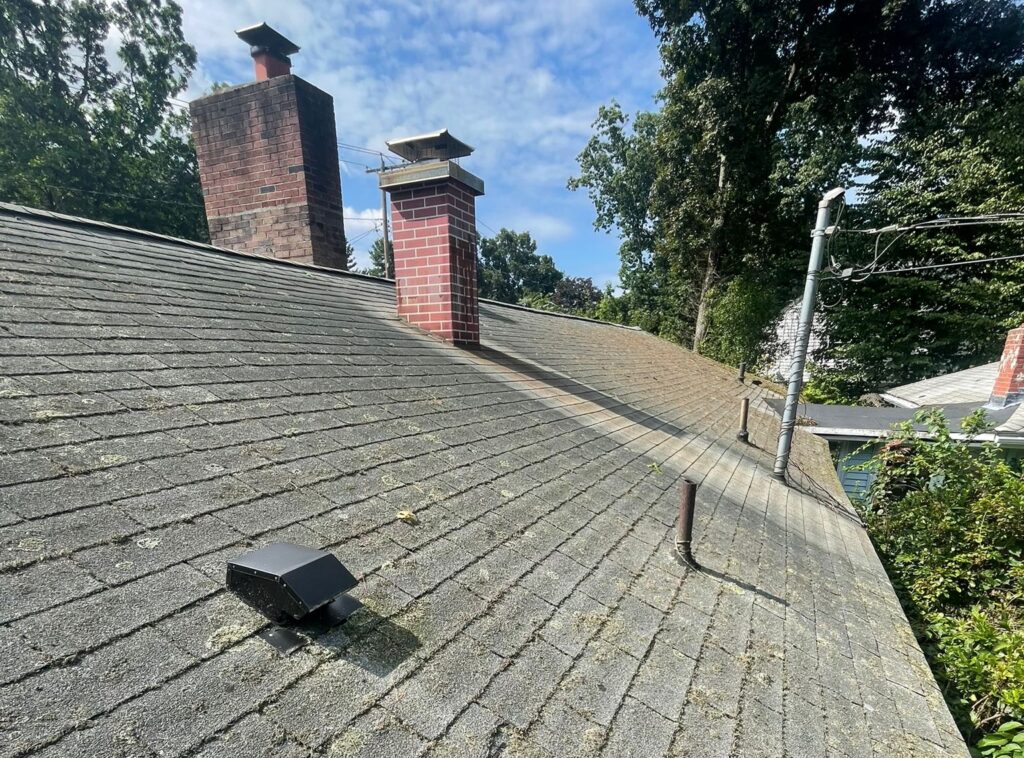
A properly functioning roof system is more than just shingles and decking; it requires a balanced ventilation system to manage temperature and moisture in the attic space. Contrary to popular belief, a roof that functions efficiently in the summer months will also perform better in the winter, significantly impacting your home’s energy consumption and the longevity of your materials.
Masterpiece Roofing specializes in creating balanced attic ventilation systems that reduce your energy bills and maximize the lifespan of your roof.
Why Roof Ventilation Matters for Energy Efficiency
Ventilation is the natural regulation system for your roof, and failure to provide adequate airflow forces your HVAC system to work harder year-round.
Heat Build-up in Attic Drives up Air-Conditioning Load.
In the summer, sunlight hitting the roof can drive attic temperatures up to $150^\circ\text{F}$ or higher. Without proper ventilation, this superheated air radiates down through the ceiling insulation and into your living spaces. This temperature increase forces your air conditioning unit to run longer and more frequently to maintain a comfortable indoor temperature, directly increasing your electric bill. Proper ventilation flushes this hot air out, keeping the attic temperature closer to the ambient outside air.
Moisture Accumulation Reduces Insulation Performance.
Moisture is constantly generated inside the home through activities like cooking and showering. If this warm, moist air leaks into the attic and cannot escape, it condenses on the cold surfaces (like the rafters and the underside of the sheathing). When insulation absorbs moisture, its effective R-value (its ability to resist heat transfer) plummets, further hindering its performance and leading to heat loss in winter and heat gain in summer.
Common Ventilation Systems & How They Work
The most effective ventilation system relies on the principle of continuous airflow.
Soffit Vents + Ridge Vents (Intake + Exhaust)
This is the optimal, most passive, and most effective system, known as balanced ventilation.
- Intake (Low): Soffit vents, located in the underside of the roof overhang (eaves), draw cool, outside air into the attic space.
- Exhaust (High): Ridge vents, installed along the peak of the roof, allow the hot, stagnant air to escape.
The resulting continuous path of airflow creates a constant convection current, moving the air mass and preventing heat and moisture pockets from accumulating.
Powered Attic Fans, Turbine Vents for More Challenging Roofs
- Turbine Vents: Use wind power to physically pull air out of the attic. Effective in windy areas but passive otherwise.
- Powered Attic Fans: Use electricity to actively exhaust air. While effective, they can sometimes create a negative pressure that pulls conditioned air from the living space through ceiling leaks, defeating the energy-saving purpose. They are generally only recommended for difficult or complex roof designs where passive ventilation is insufficient.
How Ventilation Impacts Your Energy Bills & Roof Life
The benefits of balanced ventilation extend well beyond seasonal comfort.
Reduces Stress on HVAC → Lowers Energy Cost.
By venting the attic heat in the summer, the HVAC system does not have to fight the radiant heat gain, allowing it to run more efficiently and reducing the overall cooling load on the unit. This extends the life of your air conditioner and saves on utility costs.
Reduces Materials Fatigue and Prolongs Roof Lifespan.
Extreme heat is a primary factor in the premature degradation of roofing materials. Attic temperatures over $150^\circ\text{F}$ cause the asphalt shingles and the sheathing to age rapidly, leading to cracking, curling, and granule loss. A properly ventilated attic reduces the roof deck temperature, which significantly extends the life and warranty of the shingles.
Implementation Tips for Homeowners
A proactive approach to ventilation helps protect your investment.
Inspect Attic Heat and Ventilation Performance (Temperature Difference)
On a hot, sunny day, if your attic feels substantially hotter than the outside air temperature, your ventilation is likely inadequate. Ensure that insulation is not blocking the soffit vents and that there is a clear path for air movement.
Combine Ventilation with Proper Insulation and Roofing Material
Ventilation works best when paired with air-tight insulation. You must seal all ceiling penetrations before adding insulation, and then ensure the intake and exhaust vents are correctly sized for your attic’s square footage, creating a true, continuous airway.
Check for Signs: Uneven Snow Melt, Attic Heat Spots, Moisture on Rafters.
Look for these signs of poor ventilation and heat loss:
- Ice Dams/Uneven Snow Melt: Indicates warm spots on the roof surface.
- Wet or Sweaty Rafters: A clear sign of moisture condensation in the winter.
- Musty Odor in Attic: Suggests mildew or mold growth due to persistent moisture.
FAQs
“Can attic ventilation really lower my cooling costs?”
Yes, demonstrably. Studies have shown that effective attic ventilation can drop the roof deck temperature by up to $30^\circ\text{F}$ to $40^\circ\text{F}$ on hot days, reducing the heat transfer into the living space. This relief can translate to significant savings on air conditioning costs, particularly in the peak summer months.
“Does ventilation help in winter as well as summer?”
Absolutely. In the winter, ventilation is essential for moisture control. By circulating cold outside air through the attic, it keeps the roof deck cold, preventing ice dams and eliminating condensed moisture that leads to mold, mildew, and wet, compromised insulation.
“How do I know if my roof ventilation is inadequate?”
The simplest method is to use the 1/300 Rule: for every 300 square feet of attic floor space, you should have at least 1 square foot of net free ventilating area (NFVA), equally split between intake (soffit) and exhaust (ridge). If your attic is poorly vented, you will see high heat, excess moisture, or frequent ice dams.
Invest in the longevity and efficiency of your home by perfecting your roof’s ventilation.
Contact Masterpiece Roofing today for a professional ventilation assessment and upgrade to a balanced system.