
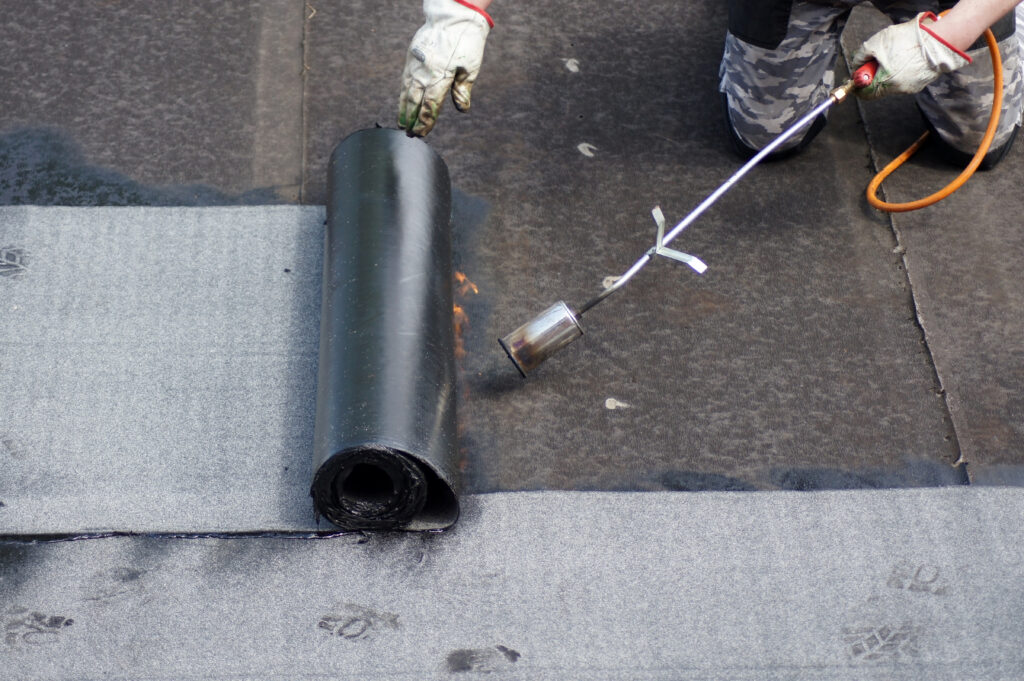
Roof waterproofing is a specialized service that goes beyond standard roofing practices to provide a complete, continuous barrier against water intrusion. This process is essential for protecting the structural integrity of your home, especially in vulnerable areas like flat roofs, valleys, and around penetrations.
What Is Roof Waterproofing?
Roof waterproofing involves applying specialized materials that form an impenetrable shield over the roof surface or critical areas. These materials are engineered to prevent water from soaking in or passing through the roofing system, even under prolonged saturation or pressure.
Difference Between Waterproofing and Standard Roofing
The fundamental difference lies in the material’s capability:
- Standard Roofing (e.g., Shingles): This is designed to be water-shedding. It relies on gravity and overlapping layers to quickly direct water off the roof surface. If water sits (ponds) or is driven by high wind pressure, it can often find a path past the overlaps and seals, making the system water-resistant but not waterproof.
- Waterproofing (e.g., Membranes/Coatings): This creates a truly waterproof seal. The materials form a monolithic (seamless) membrane that prevents water penetration even when submerged. This is critical for roofs where water tends to sit, or where vulnerable penetrations exist.
Areas Most Vulnerable to Water Intrusion
Most roof failures occur not in the middle of a panel or shingle, but at transition points. Waterproofing services specifically target these high-risk areas:
- Flashing: Around chimneys, skylights, vent pipes, and wall-to-roof transitions. If flashing is inadequate, it is the first place water will exploit.
- Seams and Penetrations: Where roof materials join together, or where equipment (HVAC, solar mounts) penetrates the roof deck.
- Low-Slope/Flat Areas: These areas are highly susceptible to “ponding,” where water pools and sits for extended periods, putting the roofing material under sustained stress.
Common Roof Waterproofing Methods
Professional waterproofing uses high-performance materials tailored to the roof type and environmental exposure.
Liquid-Applied Membranes
Liquid-applied membranes are seamless coatings that are rolled or sprayed onto the roof surface. They cure into a thick, rubber-like, monolithic layer that adheres fully to the substrate.
- Materials: Common types include Polyurethane, Acrylic, and Silicone. Polyurethane is known for its extreme durability and tensile strength, while Silicone offers excellent resistance to ponding water and UV degradation.
- Benefit: They conform perfectly to unusual shapes and complex roof features, providing true, continuous coverage without seams.
Elastomeric Coatings
Elastomeric coatings are highly elastic, reflective materials often used as a restorative measure. They stretch and contract with the roof’s thermal movement without cracking, maintaining a tight, waterproof seal.
- Benefit: Many elastomeric coatings are bright white, offering high solar reflectivity. This not only waterproofs the roof but also lowers the surface temperature, reducing cooling costs within the building. They are often used over existing flat roofs (like modified bitumen or single-ply systems).
Waterproof Underlayments
These are typically used beneath standard roofing materials (shingles, metal) in specific, vulnerable zones, particularly along eaves, valleys, and rakes.
- Materials: Often referred to as “ice and water shield,” these are heavy-duty, self-adhering modified bitumen or synthetic membranes.
- Benefit: They aggressively stick to the roof deck, sealing around fasteners (nails and staples), and are highly effective at preventing water penetration from ice dams or wind-driven rain.
Flashing and Sealant Upgrades
A key part of a comprehensive waterproofing service involves upgrading existing flashing systems. This includes:
- High-Performance Sealants: Using specialized sealants (e.g., specialized polyurethanes) that maintain flexibility and adhesion longer than standard caulking materials.
- Custom Flashing: Installing continuous metal flashing or using liquid-applied membranes to seamlessly blend flashing into the main roof surface.
When Roof Waterproofing Is Recommended
Waterproofing is not just for repairing leaks; it is often a proactive step to extend the life of a roof.
Flat and Low-Slope Roofs
This is the most critical application for waterproofing. Since these roofs drain slowly and are highly prone to ponding water, traditional roofing materials cannot offer reliable long-term protection. A robust, seamless membrane is essential to withstand continuous water exposure.
Older Roofs with Recurring Leaks
If a roof is still structurally sound but approaching the end of its typical lifespan and has developed multiple, localized leaks, applying a liquid-applied membrane or elastomeric coating can be a highly effective, cost-saving alternative to immediate replacement. It restores flexibility and seals aging surfaces.
Roofs in Harsh Weather Climates
In regions subject to heavy snowfall, extreme heat cycles, or frequent high-wind storms, waterproofing adds a necessary layer of resilience. The use of specialized underlayments protects against damage from ice dam formation, and elastomeric coatings mitigate thermal shock damage.
Benefits of Professional Waterproofing
Investing in professional roof waterproofing provides returns in protection, longevity, and reduced maintenance.
Leak Prevention
By creating a truly monolithic, seamless barrier, professional waterproofing eliminates the common entry points for water: seams, joints, and fastener holes. This proactive measure virtually eliminates leaks caused by heavy rain or ponding.
Extended Roof Lifespan
Waterproofing systems, particularly high-quality acrylic and silicone coatings, offer superior UV resistance. By protecting the underlying roof material (like modified bitumen or single-ply membrane) from the sun’s harsh rays, they can dramatically extend the roof’s functional lifespan by 10 to 20 years.
Reduced Repair Costs Over Time
The interior damages caused by roof leaks—mold, damaged insulation, destroyed ceilings, and electrical hazards—are often far more expensive than the roof repair itself. By preventing leaks entirely, a waterproofing system significantly reduces these costly interior repairs and preserves the home’s structural elements.
FAQs
How long does roof waterproofing last?
The durability depends heavily on the chosen material and the quality of the application. High-end, professionally applied liquid membranes (such as silicone or polyurethane) typically come with warranties ranging from 10 to 25 years. Maintenance coatings may need touch-ups sooner, but a full system is built for long-term protection.
Is waterproofing better than roof replacement?
It depends on the roof’s underlying condition.
- Waterproofing is better if the roof deck is sound, the structure is intact, and the primary roofing material just needs surface renewal or protection from UV/ponding water. It is a cost-effective restorative option.
- Roof Replacement is necessary if the roof deck has widespread rot, the structural components are compromised, or the existing roof is past the point of repair. Waterproofing cannot fix structural decay.
Can waterproofing be applied to any roof?
Most modern waterproofing methods are primarily designed and most effective for flat or low-slope roofs (where water may sit). While products like ice and water shields are used on steep-slope roofs in specific areas (eaves and valleys), applying a full liquid membrane or coating to a steep-slope roof is generally unnecessary and less common than on commercial or residential flat roofs.
Don’t wait for a leak to compromise your home’s integrity.
Contact a certified roofing specialist today to assess your roof’s vulnerability and invest in a professional waterproofing solution that guarantees peace of mind.