
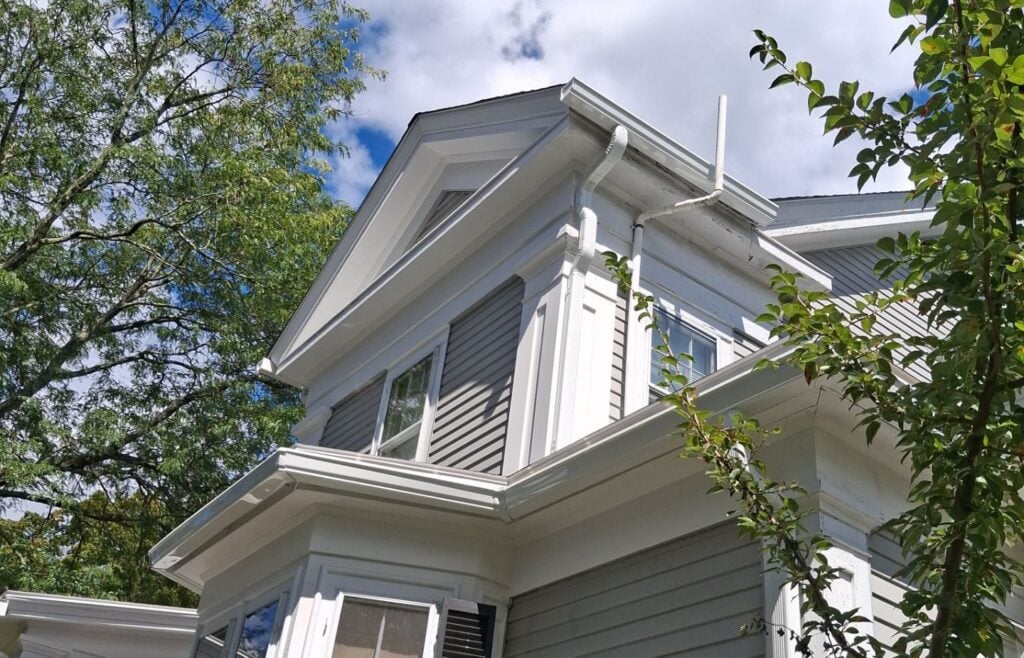
When looking at the silhouette of a home, the roof overhang is often viewed purely as an aesthetic choice. However, in the world of professional roofing and home construction, the overhang is one of the most critical defensive features of a building’s exterior. It serves as the first line of defense against the elements, determining how well your home will age and how often you will need to invest in siding or foundation repairs.
At Masterpiece Home Services, we understand that a well-engineered roof is about more than just shingles—it is about managing water and thermal energy to protect the entire structure.
Quick Answer: Roof Overhangs Protect Walls, Doors & Foundations
The primary purpose of a roof overhang is to direct water away from the house. By extending the roofline beyond the exterior walls, an overhang ensures that rain, melting snow, and debris fall at a distance from the foundation. Without this extension, water would run directly down the siding, into window frames, and pool at the base of the walls, leading to rot, mold, and basement flooding.
How overhangs manage rain and snow
In the U.S., where climates range from heavy tropical downpours to massive winter snowfalls, the overhang acts as a shield. During rainstorms, it prevents “sheeting”—the process where water coats the entire vertical surface of your home. In winter, a properly sized overhang keeps heavy snow from accumulating directly against the top of your exterior walls, reducing the risk of water infiltration as the snow melts.
Why homes without overhangs are more vulnerable
Modern “minimalist” or “industrial” designs sometimes eliminate overhangs for a sleek look. However, these homes are significantly more vulnerable to:
- Window Leaks: Water is forced into the seals of windows.
- Siding Delamination: Constant moisture cycles cause paint to peel and wood siding to rot prematurely.
- Foundation Erosion: Continuous water dripping at the base of the wall can wash away soil and cause foundation settling.
What Is a Roof Overhang?
Definition and main components
A roof overhang is the portion of the roof rafters or trusses that extends past the exterior wall of the building. It is not a separate attachment but an integral part of the roof’s framing.
- The Eave: This is the horizontal edge of the roof that overhangs the wall.
- The Rake: This refers to the slanted edge of an overhang on the gable end of a house.
- The Soffit: The underside of the overhang, which is often vented to allow the attic to “breathe.”
How it connects to fascia and eaves
The fascia is the vertical finishing board that runs along the edge of the overhang. It is where your gutters are typically mounted. Together, the eave, soffit, and fascia form a sealed “box” that protects the ends of the rafters from moisture and keeps pests out of your attic.
Benefits of a Proper Roof Overhang
Prevents siding and window damage
By casting a “shadow” of protection, overhangs keep your siding dry. This extends the life of exterior paint and prevents moisture from seeping into the wooden sheathing behind your siding. Windows also benefit from reduced exposure to driving rain, which is the leading cause of interior water damage.
Reduces ice dams and moisture buildup
In colder U.S. regions, overhangs play a vital role in preventing ice dams. A vented soffit under the overhang allows cool air to enter the attic, maintaining a consistent temperature across the roof deck. This prevents snow from melting on the upper roof and refreezing at the cold edge, which creates the “dam” that forces water under your shingles.
Improves energy efficiency
Overhangs provide “passive solar shading.” In the summer, when the sun is high in the sky, a wide overhang shades windows from direct heat, significantly reducing cooling costs. In the winter, because the sun is lower in the sky, the sunlight can still reach under the overhang to help warm the home.
How Much Roof Overhang Do You Need?
Typical overhang depth by roof style
- Standard Ranch or Colonial: Usually features a 12 to 18-inch overhang. This is considered the “sweet spot” for most temperate climates.
- Craftsman or Bungalow: These styles often feature deep overhangs of 24 inches or more, supported by decorative brackets (corbels).
- Modern/Minimalist: Often restricted to 0 to 6 inches, requiring advanced waterproofing membranes on the walls.
Climate considerations
- High-Rainfall Areas: Architects often recommend 24-inch overhangs to ensure maximum water shedding.
- High-Wind/Hurricane Zones: Excessively large overhangs can actually be a liability, as they act like a “wing” that wind can get under to lift the roof off. In these areas, 12 inches is often the maximum recommended depth for structural safety.
FAQs
Can a roof overhang be added later?
While technically possible, it is a major structural undertaking. It involves stripping the roof, extending the rafters, and potentially reinforcing the wall plates. It is almost always more cost-effective to address overhang depth during a full roof replacement or a major remodel.
Do roof overhangs need gutters?
Yes. While the overhang moves water away from the wall, the water still lands on the ground. Without gutters, that water will eventually erode the landscape and penetrate the foundation. Gutters catch the water at the fascia and move it through downspouts to a safe drainage area.
Are roof overhangs required by code?
Building codes in most U.S. jurisdictions do not strictly mandate a specific length for overhangs, but they do mandate “moisture protection.” Because overhangs are the most effective way to achieve this, they are a standard requirement in professional architectural plans.
Protect Your Investment with Expert Roofing Solutions
Your roof is a complex system designed to keep your home dry and energy-efficient. Whether you are dealing with fascia rot, gutter issues, or planning a new roof installation, understanding the role of your overhang is essential.
Is your roof shedding water effectively? Contact Masterpiece Home Services today for a professional roof and eave inspection to ensure your home is fully protected!