
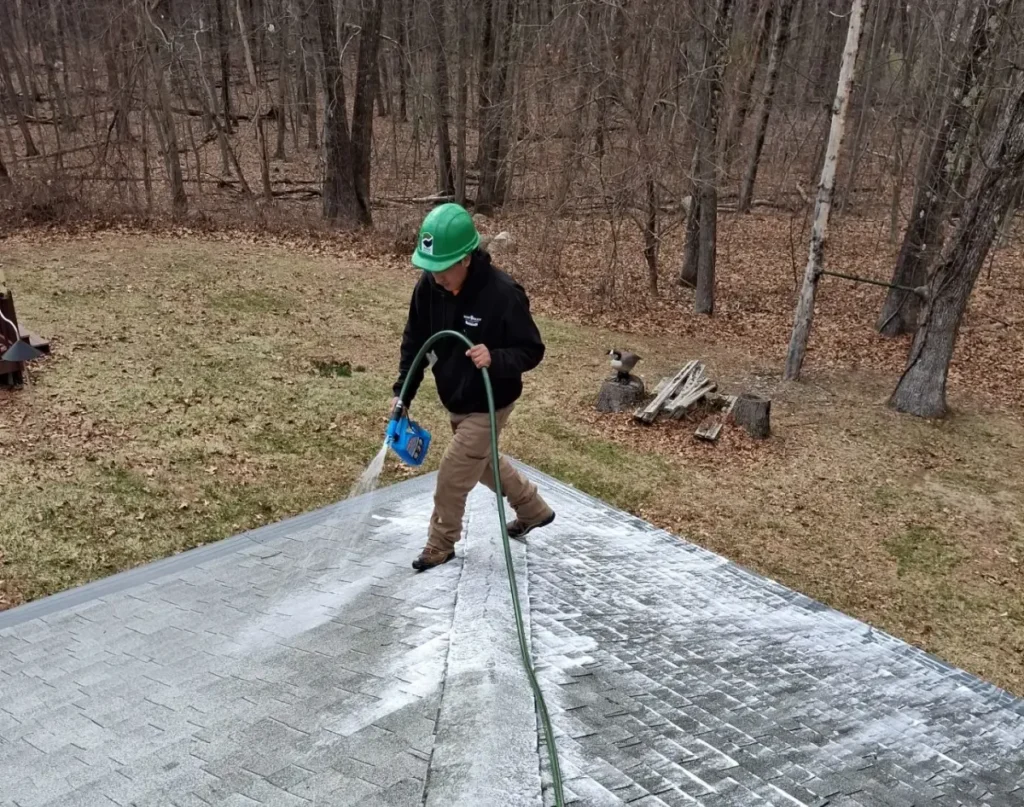
A clean roof not only enhances your home’s curb appeal but also plays a crucial role in its longevity and performance. Over time, asphalt shingle roofs can accumulate unsightly black streaks, moss, algae, and lichen. These aren’t just cosmetic issues; they can trap moisture, accelerate granule loss, and compromise your roof’s integrity. Masterpiece Roofing guides you through safe and effective methods for cleaning your shingled roof, helping you protect your investment and maintain a pristine exterior.
Important Note: Cleaning a roof can be dangerous. It involves working at heights, often on slippery surfaces, and using chemicals. If you are uncomfortable with heights, lack proper safety equipment, or prefer to avoid chemical handling, it is always recommended to hire a professional roof cleaning service or a qualified roofing contractor like Masterpiece Roofing.
Why avoid pressure washing
While pressure washers are effective for many outdoor cleaning tasks, they are generally not recommended for cleaning asphalt shingle roofs.
-
Granule Loss: Asphalt shingles are covered with a protective layer of ceramic granules, which provide UV protection and give the shingles their color. High-pressure water jets can dislodge and strip away these granules, significantly reducing the lifespan of your shingles and exposing the asphalt to harmful UV rays.
-
Shingle Damage: Pressure washing can lift, loosen, or even break shingles, especially if directed underneath the shingle tabs, forcing water into your roof deck or attic. This can lead to leaks and extensive damage.
-
Voiding Warranties: Many shingle manufacturers’ warranties explicitly state that using a pressure washer on their products will void the warranty.
-
Ineffective Against Algae Roots: Pressure washing often removes only the surface growth of algae and moss, leaving behind the microscopic roots that allow them to quickly regrow. A chemical “soft wash” treatment is far more effective at killing these organisms at their source.
Instead of pressure washing, always opt for a gentler, chemical-based “soft wash” technique.
Recommended cleaning solutions: 50/50 bleach/water or vinegar mix
The most effective and widely recommended solutions for cleaning shingled roofs are either a bleach-based mix or a vinegar-based mix, each with its own advantages.
-
50/50 Bleach/Water Mix (Most Common & Effective):
-
Composition: Equal parts household bleach (sodium hypochlorite) and water.
-
Effectiveness: Highly effective at killing black algae (Gloeocapsa magma, which causes the black streaks), moss, and lichen. The bleach acts as a powerful biocide, breaking down the organisms.
-
Preparation: Mix in a garden sprayer. For every gallon of solution, you can add about a quarter cup of a liquid dish soap or a dedicated non-foaming roof cleaning surfactant. The soap helps the solution cling to the roof surface longer.
-
Precautions: Bleach can be corrosive to metal (gutters, flashing) and harmful to plants. Thoroughly pre-wet surrounding plants and cover them with plastic sheeting if necessary. Wear appropriate PPE (gloves, eye protection, old clothes).
-
-
Vinegar Mix (for a milder, eco-friendlier option):
-
Composition: A strong solution of white vinegar and water, often 1:1 or 2:1 vinegar to water for tough growth.
-
Effectiveness: Less potent than bleach, but effective for lighter algae, moss, and mildew. It’s a more environmentally friendly option, less harmful to plants, and has no bleaching effect.
-
Preparation: Mix in a garden sprayer.
-
Precautions: May require more frequent application or more scrubbing for heavy growth. The acetic acid can still affect some plants, so pre-wetting is wise.
-
Important: Never mix bleach and vinegar, as this creates highly toxic chlorine gas.
Soft-wash technique: Sprayer application, dwell time, rinse
The “soft-wash” method is the safest and most effective way to clean a shingled roof.
-
Protect Surroundings: Thoroughly wet down all surrounding plants, shrubs, and trees with plain water. If possible, cover delicate plants with plastic sheeting or tarps. Keep the ground around the house wet during the process.
-
Apply Solution:
-
Transfer your chosen cleaning solution (bleach/water or vinegar mix) into a garden sprayer (pump sprayer).
-
Working in manageable sections (e.g., one side of the roof at a time), evenly spray the solution onto the roof shingles. Start from the bottom of the section and work your way up to ensure even coverage and that the solution saturates the growth.
-
Avoid overspraying onto other parts of the house if using bleach.
-
-
Dwell Time:
-
Allow the solution to dwell on the roof for the recommended time. For bleach, this can be 10-20 minutes, sometimes longer for very stubborn growth. For vinegar, it might be 30 minutes to an hour.
-
Do not let the solution dry on the roof. If it starts to dry, lightly mist it with water (not more solution) to keep it wet.
-
You should observe the black streaks, moss, and algae starting to turn brown or loosen.
-
-
Gentle Rinse (Crucial):
-
Using a standard garden hose (not a pressure washer) with a low-pressure nozzle, gently rinse the entire treated section of the roof. Start from the ridge and work downwards, allowing the rinse water to carry away the dead organisms and solution.
-
Continuously rinse surrounding plants with plain water as the solution drains off the roof.
-
-
Repeat (If Necessary): For very heavy moss or lichen, you may need to apply a second treatment or gently scrub stubborn spots with a soft-bristle brush (never a wire brush) before rinsing.
Best time of year & temperature range
Choosing the right conditions for roof cleaning optimizes effectiveness and safety.
-
Best Time of Year:
-
Mild Seasons: Spring or fall are ideal. Temperatures are moderate, and there’s often sufficient cloud cover to prevent the solution from drying too quickly.
-
Avoid Extreme Heat: Do not clean your roof in direct scorching sunlight or during extreme heat. The solution will evaporate too quickly, reducing effectiveness and increasing the risk of chemical burns or damage to shingles.
-
Avoid Freezing Temperatures: Do not clean in freezing temperatures, as water can freeze on the roof, creating slip hazards and potentially damaging shingles.
-
-
Temperature Range: A temperature range of 50°F to 85°F (10°C to 30°C) is generally ideal. This allows the solution to work effectively without drying too fast.
-
Cloudy Day (Ideal): A cloudy day with no rain predicted is perfect. The lack of direct sun allows the solution to dwell longer without drying out.
-
Calm Winds: Avoid windy days, as wind can blow the cleaning solution onto unwanted areas or make it difficult to control your spray.
Roof cleaning safety & precautions
Safety is paramount. Do not attempt roof cleaning if you are uncomfortable with heights or lack proper equipment.
-
Footwear: Wear soft-soled, non-slip shoes with good traction.
-
Ladder Safety: Use a sturdy, properly secured ladder that extends at least 3 feet above the roofline. Ensure it’s placed on stable, level ground. Have a spotter if possible.
-
Fall Protection: For steeper roofs or if working alone, consider using a fall arrest system (safety harness, rope, and anchor point).
-
Work with a Buddy: Never work on a roof alone. Have someone nearby to assist in case of an emergency.
-
Chemical Safety (PPE):
-
Wear safety glasses or goggles to protect your eyes from splashes.
-
Use waterproof gloves to protect your hands.
-
Wear old clothes that you don’t mind getting stained.
-
Preventing future growth
After cleaning, you can take steps to prevent algae and moss from returning:
-
Trim Overhanging Trees: Trim back tree branches that shade the roof. Sunlight is a natural inhibitor of moss and algae growth.
-
Keep Gutters Clean: Clogged gutters can trap moisture and create a damp environment where algae thrive.
-
Install Zinc or Copper Strips: Installing strips of zinc or copper along the roof ridge can help prevent future growth. As rainwater washes over the metal, it carries metallic ions down the roof that are toxic to algae and moss.
By following these safe and effective cleaning methods, you can restore the beauty of your shingled roof and ensure it continues to protect your home for years to come. If the task seems too daunting, don’t hesitate to contact Masterpiece Roofing for a professional assessment and cleaning service.
Contact Masterpiece Roofing
Ready to get started on your roofing project? Masterpiece Roofing is here to help with all your roofing needs in Massachusetts. Contact us today for a free consultation and estimate.
Phone: (508) 533-0499
Email: info@masterpieceroof.com
Service Areas: Holliston, Ashland, Medway, Millis, and surrounding Massachusetts communities