
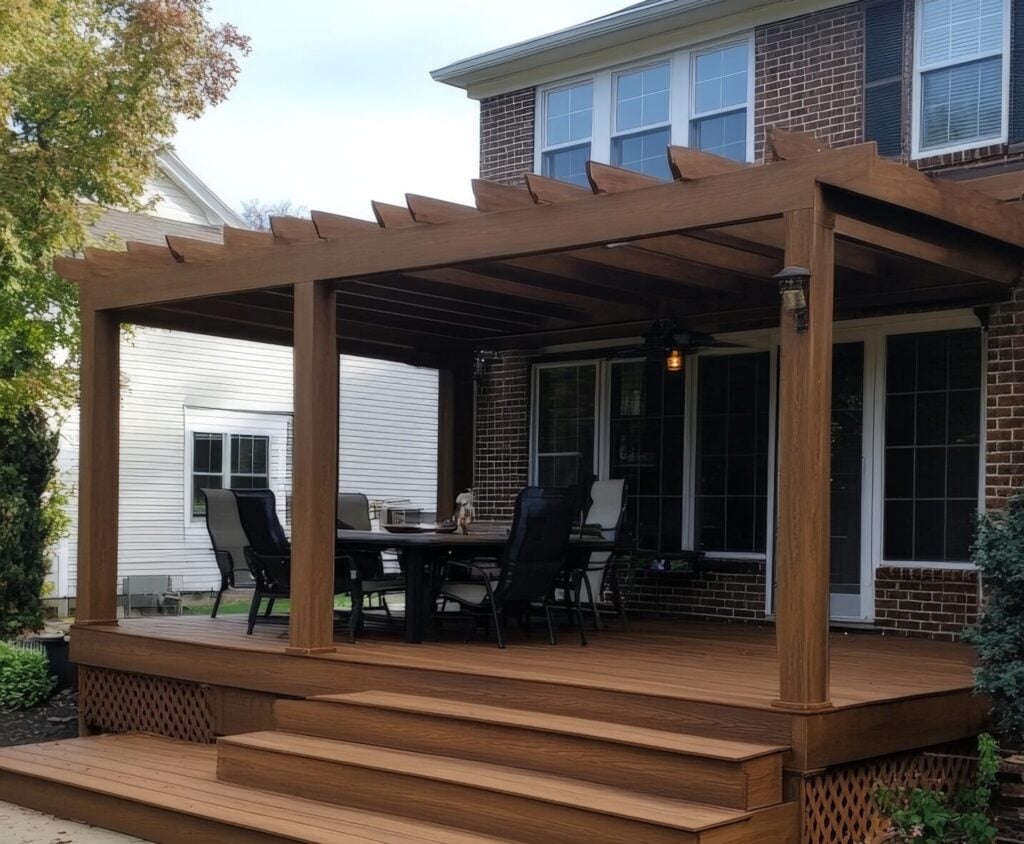
Properly attaching a deck to the exterior wall of a house is essential for structural integrity and, critically, for preventing catastrophic moisture damage to the home. The connection point—the ledger board—is where most deck failures and water infiltration issues originate if not installed according to strict building standards.
Understanding the Ledger Board System
The ledger board serves as the critical link between the deck structure and the house structure. It is the primary means by which half the weight of the deck and its load (people, furniture, snow) is transferred back to the main dwelling.
What a Ledger Board Does
The ledger is a pressure-treated wood board (typically a 2×8, 2×10, or 2×12) fastened directly to the rim joist or band joist of the house. Its main purpose is to:
- Transfer Load: Distribute the vertical and lateral weight of the deck (and everything on it) safely into the home’s framing.
- Anchor the Joists: Provide a solid surface for attaching the deck joists using metal connectors (joist hangers).
If a ledger board fails (either by pulling away from the house or by structural decay), the deck structure will collapse.
Why Proper Flashing is Critical (Keeps Water Out of the House Structure)
The biggest risk when attaching a ledger is creating a pathway for water to enter the house wall, leading to wood rot, mold, and damage to the rim joist or sill plate. This is known as the “rot zone.”
Proper flashing is a multi-layered defense:
- Self-Adhering Membrane: A waterproof barrier (like peel-and-stick material) is applied directly to the house wall before the ledger is installed. This protects the vulnerable wood sheathing.
- Metal Flashing: A specialized, non-corrosive metal or PVC flashing (often Z-flashing) is installed over the top edge of the ledger board and extended up and behind the house siding, directing any water that runs down the wall over the ledger and onto the deck surface.
Without this dual-layer flashing, water will inevitably seep behind the ledger, trapping moisture and causing expensive structural decay in the home over time.
Tools, Fasteners & Materials You’ll Need
Utilizing the correct, code-compliant materials is non-negotiable for a safe deck attachment. Never substitute materials.
Lag Screws vs. Through Bolts
The fasteners you use must be structural grade and capable of resisting the outward pulling force (withdrawal) and the downward force (shear) of the deck load.
- Lag Screws (Lag Bolts): These are large, heavy-duty screws, typically 3/8″ or 1/2″ diameter, used with specific washers. Modern structural screw systems (e.g., LedgerLOK or similar proprietary fasteners) are often preferred due to their superior load values and easier installation, often eliminating the need for pre-drilling.
- Through Bolts (Carriage Bolts or Hex Bolts): These are considered the gold standard for maximum structural security. They pass completely through the ledger board, the house rim joist, and are secured with a washer and nut on the inside of the house structure. They offer excellent resistance to lateral movement.
Note: All fasteners must be hot-dip galvanized or stainless steel to prevent corrosion when contacting pressure-treated lumber.
Ledger Flashing Kits and Waterproof Barriers
You will need:
- Self-Adhering Flashing Tape: A bituminous or rubberized asphalt membrane to apply directly to the house sheathing. This acts as the first line of defense.
- Metal or PVC Flashing: A piece of angled flashing (Z-flashing) designed to sit on top of the ledger and tuck up behind the siding to shunt water.
Deck Joist Hangers and Connectors
After the ledger is attached, the deck joists (the beams that span the deck frame) are attached to the ledger using joist hangers. These galvanized steel connectors support the joist from below and transfer the vertical load directly to the ledger. Always use the specific joist hanger nails recommended by the manufacturer (typically 1-½ inch joist hanger nails, not common framing nails).
Step-by-Step Attachment Process
This process ensures structural stability and long-term water protection.
Marking and Leveling the Ledger
- Determine Height: Mark the desired finished deck surface height on the house wall. Remember that the top of the ledger must be dropped by the thickness of the decking material (e.g., 1 inch for 5/4 deck boards) to ensure the finished deck is level with the marked height.
- Confirm Level: Use a long level or a builder’s transit level to mark the entire length of the ledger location precisely. The ledger must be perfectly level to ensure proper water drainage on the deck and a seamless appearance.
Flashing Installation
- Remove Siding: Carefully remove the house siding (wood, vinyl, brick veneer) down to the underlying wall sheathing where the ledger will sit.
- Apply Membrane: Apply the self-adhering waterproof membrane directly to the sheathing where the ledger will be placed. Extend the membrane vertically and horizontally beyond the ledger’s footprint.
Fastening Ledger to House Structure
- Pre-Drill (if required): If using traditional lag screws or through bolts, pre-drill holes through the ledger board and slightly into the house rim joist.
- Secure Ledger: Lift the ledger into place and fasten it to the house structure using the chosen structural fasteners. Fastener spacing is crucial and dictated by local codes (often a staggered pattern between 16 to 24 inches on center).
- Install Top Flashing: Install the metal or PVC Z-flashing over the top edge of the ledger. Ensure the upper leg of the flashing tucks tightly up behind the house wrap or remaining siding, creating an impenetrable water plane that sheds moisture over the ledger.
Common Mistakes to Avoid
These errors are the leading causes of deck failure and house damage.
Inadequate Flashing Leading to Rot
The most frequent mistake is simply relying on a bead of caulk or attaching the ledger without any flashing. Water will inevitably find its way in, leading to the rapid decay of the structural components of the house wall. Never skip the membrane and Z-flashing combination.
Using the Wrong Fasteners
Avoid using common nails, deck screws, or non-structural fasteners for ledger attachment. These are incapable of handling the weight and movement of a deck. Use only structural fasteners (lag screws, through bolts, or approved proprietary screws) designed and rated for lateral and vertical loads. Improper fastener type or spacing can lead to catastrophic deck separation.
Not Consulting Local Building Codes
Deck construction, especially the ledger attachment, is highly regulated. Codes dictate fastener type, spacing, lateral load connections (like tension ties or cable anchors), and distance from utility pipes and windows. Always obtain the necessary permits and schedule inspections. A professional contractor will always ensure strict adherence to local regulations.
FAQs
Do I need a permit to attach a deck?
In almost all jurisdictions across the country, building a new deck or significantly altering an existing one requires a building permit. The permit process includes plan review and mandatory inspections, ensuring the structural connection is safe and compliant.
Can I attach a deck to a brick or stone veneer wall?
No. Brick, stone, or stucco veneers are non-structural claddings. Attaching a ledger directly to the veneer will cause the veneer to fail and will not transfer the deck load to the house framing. The veneer must be carefully removed down to the structural rim joist, the ledger attached, and the flashing properly integrated with the remaining cladding.
How do you prevent deck movement over time?
While proper ledger attachment handles vertical load, lateral movement is prevented through lateral load connectors (tension ties or hold-down anchors). These structural metal connectors attach the deck frame to the floor joists inside the house, preventing the deck from sliding sideways or pulling away from the house during high wind or seismic activity. These are typically required by current building codes.
Ensure Structural Integrity and Watertight Performance.
The integrity of your home relies on professional-grade exterior connections. At Masterpiece Roofing, we understand that structural attachment and superior water protection are two sides of the same coin. Let our expertise in exterior detailing secure your deck and your home’s envelope.
Call Masterpiece Roofing today to guarantee your deck installation is safe, compliant, and protected from moisture damage.