
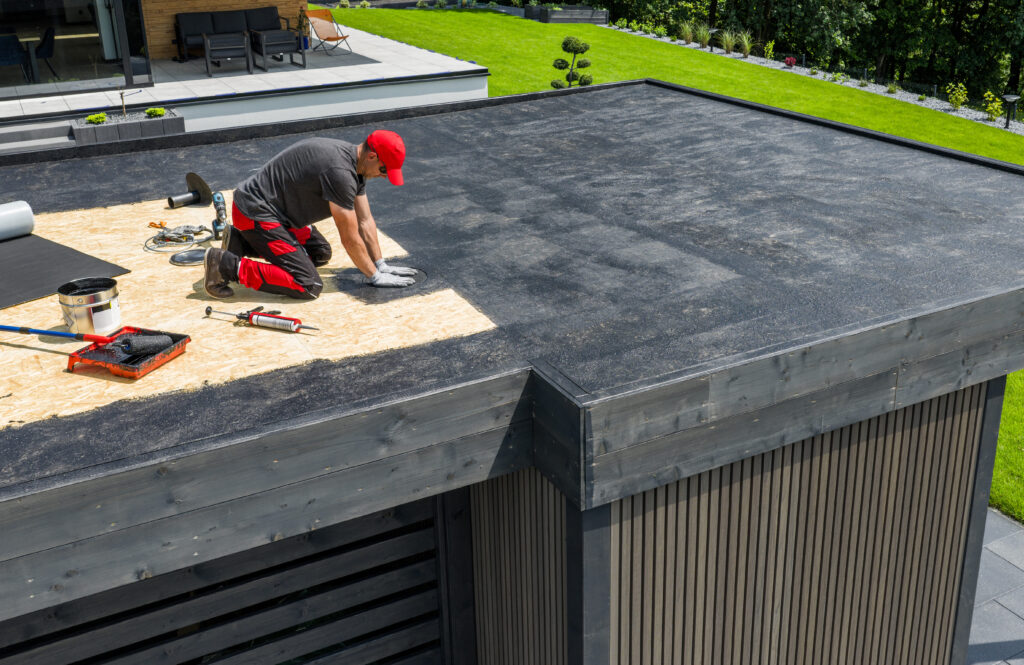
Ethylene Propylene Diene Monomer, more commonly known as EPDM or rubber roofing, is the gold standard for flat and low-slope residential and commercial properties. Known for its elasticity and resilience, it is one of the most reliable materials available, provided it is managed correctly.
Quick Answer: 20–30 Years on Average
For most property owners, a professionally installed EPDM roof will provide a service life of 20 to 30 years. However, this is not a guaranteed “set it and forget it” timeline.
EPDM Lifespan Range
- Residential (Standard): 20–25 years.
- Commercial (Heavy Duty): 25–35 years (often using thicker 60-mil or 90-mil membranes).
- With Superior Maintenance: Some rubber roofs have been known to exceed 40 years in stable climates.
Factors that Extend or Shorten Lifespan
While the material itself is incredibly durable, its “useful life” depends heavily on external variables. A roof that is neglected or poorly drained can fail in as little as 10–12 years, while a well-ventilated, well-drained system can last well into its third decade.
What Impacts Rubber Roof Longevity?
Installation Quality
The most common cause of early rubber roof failure isn’t the rubber—it’s the seams. EPDM is installed in large sheets; how those sheets are joined (using seam tape or adhesives) determines the roof’s integrity. If the substrate wasn’t dry or the adhesive was applied in improper temperatures, the seams will begin to “creep” or pull apart within years.
UV Exposure
While EPDM is naturally resistant to ultraviolet light, decades of constant exposure will eventually cause the carbon black in the rubber to oxidize. Over time, this leads to a “chalking” effect and a loss of the material’s signature elasticity.
Drainage and Ponding Water
EPDM is waterproof, but it is not designed to be a swimming pool liner. If a flat roof has poor “taper” (slope), water will sit in puddles (ponding). Standing water acts as a magnifying glass for UV rays and puts constant hydraulic pressure on the seams, significantly shortening the lifespan.
Massachusetts Freeze-Thaw Cycles
In Massachusetts, the weather is a major factor. The “freeze-thaw” cycle occurs when water enters a small crack or seam, freezes and expands, and then thaws. This constant expansion and contraction can tear at the mechanical attachments of the roof and widen small imperfections into major leaks over a single winter.
Signs Your Rubber Roof Is Nearing End of Life
Recognizing these signs early can save you from catastrophic interior water damage.
Cracking or Shrinkage
As rubber ages, it loses its plasticizers and begins to shrink. You may notice the rubber pulling away from the edges (parapet walls) or “alligatoring”—a pattern of small cracks on the surface that looks like reptile skin.
Seam Separation
If you can slide a credit card into a seam or notice the tape curling at the edges, the roof’s primary defense is gone. Once seams fail, moisture begins to rot the insulation boards underneath.
Leaks or Bubbles
Bubbles (or “blisters”) are caused by trapped moisture or air heating up and expanding under the membrane. While small blisters are often cosmetic, large ones indicate that the membrane is no longer bonded to the roof deck.
Rubber Roof Maintenance Tips
- Keep it Clean: Remove leaves, branches, and debris that can trap moisture and encourage mold growth.
- Inspect the Flashings: Most leaks occur around chimneys, vents, and skylights. Ensure the metal flashing and caulking are intact.
- Avoid Chemical Spills: EPDM is highly sensitive to petroleum-based products. Even a small spill of oil or certain roof solvents can dissolve the rubber.
- Apply a Coating: Around year 15, applying a white silicone or acrylic coating can reflect UV rays and add another 10 years of life to the membrane.
FAQs
Is EPDM better than TPO?
It depends on your goal. TPO (Thermoplastic Polyolefin) is white and reflects more heat, which is great for cooling costs. However, EPDM has a longer track record of durability and is generally easier and cheaper to repair than TPO.
Can a rubber roof last 40 years?
Yes, but it is rare. A 40-year lifespan usually requires a “ballasted” system (where the rubber is covered by a layer of smooth river stone to protect it from the sun) and a climate without extreme temperature swings.
How often should it be inspected?
You should have your rubber roof professionally inspected twice a year: once in late autumn to prepare for snow, and once in spring to check for winter damage.
Rubber Roof Inspection Services in MA
Don’t wait for a drip to find out your roof is failing. Our team specializes in the unique needs of Massachusetts flat roofing, from historic Boston brownstones to modern commercial plazas. We provide detailed thermal imaging and seam inspections to help you get every last year out of your EPDM investment.
Schedule Your Rubber Roof Health Check-Up Today!