
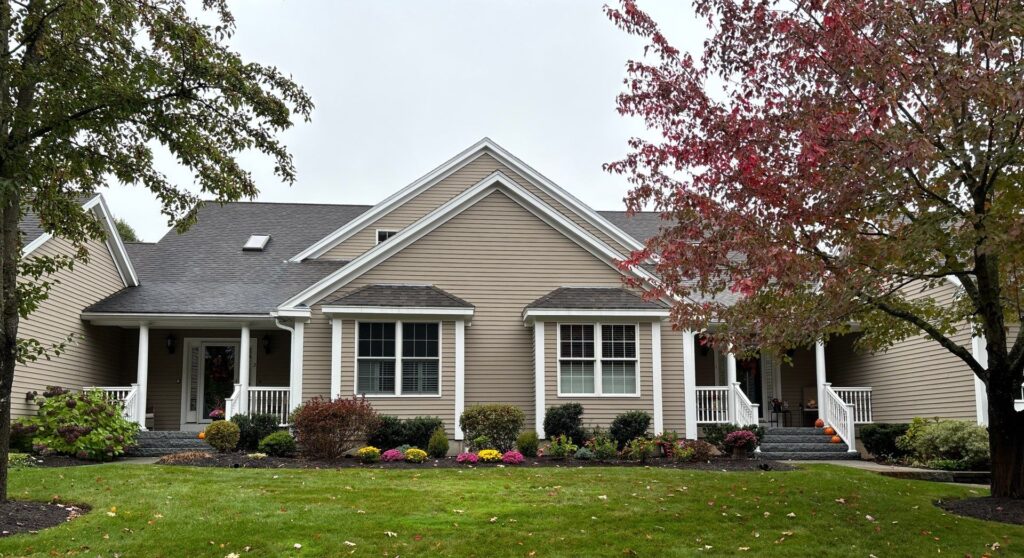
The roof is the most important structural element protecting your investment. Deciding between a flat roof (also known as a low-slope roof) and the traditional pitched gable roof comes down to more than just looks; it impacts drainage, longevity, usable space, and cost over the home’s lifetime.
Quick Definitions
Understanding the basic structure of each type is the first step in assessing their suitability for your project.
Flat Roof Basics (Very Low Slope)
Despite the name, a “flat roof” is never truly horizontal. Building codes require a minimum slope—typically about 1/4 inch per linear foot—to guide water to drainage points. Flat roofs are commonly seen on commercial buildings, modern and contemporary homes, and mid-century modern residences. They rely on continuous membrane materials.
Gable Roof Basics (Steeper Pitched Roof Type)
The gable roof is the most recognizable roof style in North America, characterized by its triangular shape created by two sloping sides that meet at a ridge. The slope angle (or pitch) can vary significantly, ranging from shallow to very steep. These roofs are typically finished with shingles, tiles, or metal panels.
Water Drainage & Weather Resistance
The primary function of any roof is to shed water effectively. The method of achieving this is fundamentally different between flat and pitched roofs.
How Steep Roofs Naturally Shed Water
Gable roofs use gravity as their primary drainage mechanism. The steep pitch naturally forces water, ice, and snow downward and off the roof edge. This design inherently minimizes ponding (standing water) and allows the use of simple, overlapping materials like asphalt shingles, which are excellent at resisting water ingress due to their placement and slope. In high-wind areas, however, steep-pitched roofs can be more susceptible to wind uplift damage if not correctly fastened.
Why Flat Roofs Need Engineered Drainage Systems
Because flat roofs have a minimal slope, they rely entirely on an engineered system to prevent water pooling. This system usually includes scuppers (openings in the parapet wall), internal drains that connect to the home’s plumbing, or external gutters and downspouts. If these drainage points are clogged by debris or damaged, water can easily pond. Ponding water significantly accelerates the degradation of the roofing membrane and is the primary cause of leaks in flat roofs.
Usable Space & Aesthetics
The roof type has a dramatic impact on both the interior volume and the exterior appearance of the structure.
Rooftop Deck or Equipment Space on Flat Roofs
The most significant advantage of a flat roof is the potential to reclaim horizontal space. A well-designed flat roof can serve as a functional rooftop deck or patio, a highly desirable feature in urban areas or areas with limited yard space. Additionally, flat roofs provide a stable, discreet location for mounting heavy mechanical equipment like large HVAC units, satellite dishes, or extensive solar panel arrays.
Traditional Pitched Silhouette of Gable Roofs
Gable roofs define the traditional American aesthetic. Their triangular form creates spacious attics or allows for dramatic vaulted ceilings internally. The empty space created by the pitch allows for crucial ventilation, reducing heat buildup and preventing moisture-related issues within the structure. While less suitable for direct use, the attic space provides easy access for maintenance and utility runs.
Cost, Materials & Maintenance
The financial comparison involves upfront costs for materials and labor versus long-term maintenance and replacement frequency.
Flat Roofs Can Be More Affordable Up Front
Flat roofs generally have a lower initial installation cost for a few reasons:
- Less Material: The square footage of the roof surface is often less than that of a comparable pitched roof.
- Easier Installation: There is less complex framing and minimal danger/labor associated with working on a low-slope surface compared to a steep pitch.
- Materials: Common flat roof materials like Modified Bitumen or single-ply TPO/EPDM membranes can be less expensive per square foot than high-end asphalt shingles or tile.
Gable Roofs May Last Longer in Snowy/Rainy Climates
In regions with heavy snow and rain loads, a gable roof is superior for longevity. The steep pitch rapidly sheds snow, preventing structural stress and melt-water infiltration. Materials like architectural asphalt shingles or metal panels often come with warranties of 30 to 50 years, often exceeding the life of most flat roof membranes.
Maintenance Needs Differ with Slope and Roofing Type
- Flat Roof Maintenance: Requires frequent inspection (often twice yearly) of the drainage system (scuppers, drains) to ensure they are clear of leaves and debris. While membranes are durable, repairs often involve patching the material, which can be less aesthetically pleasing.
- Gable Roof Maintenance: Maintenance is focused on replacing individual damaged shingles, inspecting flashing around chimneys/vents, and ensuring gutters are secure. While safer for snow and water, accessing a steep roof for repairs is more difficult and hazardous.
When One Roof Might Be Better Than the Other
The best choice is highly situational, depending on geography and design intent.
Climate and Snow Load
Gable Roof is better: In climates with high annual precipitation (rain and snow). The pitch is the most effective way to eliminate snow load and prevent ice damming.
Flat Roof may require: Specialized structural support to handle heavy snow loads, and requires heat tape or specialized drainage systems in areas prone to freeze/thaw cycles.
Architectural Style
Flat Roof is better: For contemporary, industrial, and mid-century modern homes. It provides the clean, minimalist lines associated with these styles.
Gable Roof is better: For traditional, colonial, farmhouse, and craftsman architectural styles, where the roof profile is an integral part of the home’s visual character.
HVAC or Solar Equipment Plans
Flat Roof is better: If you plan to install large, heavy mechanical units (like commercial-grade HVAC or extensive solar arrays). The load is distributed safely across the roof surface, and the equipment is hidden by the parapet walls.
FAQs
Are flat roofs more leak-prone?
A properly installed and maintained flat roof is no more leak-prone than a pitched roof. However, poor installation or neglected maintenance (clogged drains) makes them vulnerable to leaks because standing water compromises the membrane over time. Any leak that does occur on a flat roof is often harder to locate and trace than on a pitched roof.
Do gable roofs cost more?
Generally, yes, a gable roof costs more than a flat roof of the same square footage. The increase is due to the added costs of complex framing (rafters, trusses), a larger surface area requiring more material, and the higher labor cost associated with working on steep-pitched surfaces.
Which roof type lasts longer?
A gable roof covered with high-quality materials (like metal or architectural asphalt shingles) typically lasts longer than a flat roof. A well-installed shingle roof can last 30-50 years, while even the best flat roof membranes (like TPO or EPDM) typically require replacement or major re-coating around the 20–30 year mark.
Whether you’re building a sleek new modern home or replacing the traditional roof on a classic structure, the choice of roof is a foundational decision that impacts energy efficiency, maintenance, and structural integrity.
Ready to get a professional assessment of the structural and material requirements for your new roof installation?
Contact Certified Roofing Professionals today for a detailed, no-obligation estimate on both gable and flat roof systems, ensuring your home is protected by the best solution for your climate and style.