
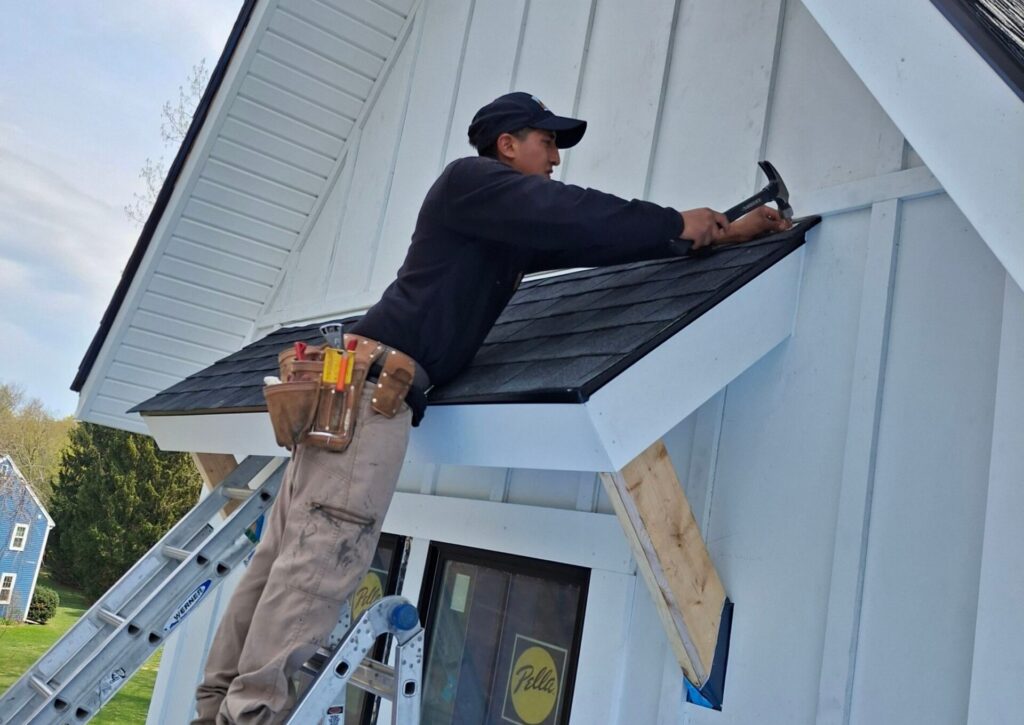
Your front door is more than just an entryway; it is a critical component of your home’s exterior “envelope.” However, doors are often vulnerable to the elements, facing direct exposure to driving rain, heavy snow, and the relentless UV rays of the sun. This is where a door roof (sometimes called a door canopy or portico) becomes an essential architectural feature.
At Masterpiece Roofing, we view your roof as a comprehensive system designed to shed water away from your home’s structural components. A door roof is an extension of that protection, ensuring your entryways remain dry, safe, and durable.
Quick Answer: A Door Roof Protects Doors From Rain, Snow & Ice
A door roof is a small, permanent structure built over an exterior door to provide overhead shelter. Its primary function is to intercept precipitation before it reaches the door frame, threshold, and hardware.
Why Entryway Protection Matters in Harsh Climates
In many regions of the US, weather can be extreme. In the Northeast and Midwest, snow can pile up against a door, causing moisture to seep into the sill and eventually rot the subfloor. In the South and coastal areas, heavy tropical rains can force water through door seals. A door roof acts as a first line of defense, significantly reducing the volume of water that ever touches the door assembly.
What Is a Door Roof?
Structure and Purpose
Unlike a temporary umbrella or a retractable fabric cover, a door roof is a fixed structural element. It typically consists of a small roof section—often matching the pitch and shingle style of the main house—supported either by brackets (corbels) attached to the wall or by decorative columns. Its purpose is twofold: to protect the door and to provide a dry space for residents to stand while searching for keys.
Common Materials Used
To ensure longevity, door roofs are constructed with weather-resistant materials:
- Framing: Pressure-treated lumber or moisture-resistant composites.
- Roofing: Asphalt shingles, standing-seam metal, or copper.
- Support: Heavy-duty wood corbels, wrought iron brackets, or fiberglass columns.
Door Roof vs. Awning vs. Canopy
While these terms are often used interchangeably, there are distinct structural differences:
Structural Differences
- Door Roof (Portico): A permanent, “built-in” part of the house. It is tied into the home’s framing and usually features the same roofing materials as the main house.
- Awning: Typically made of fabric or lightweight metal. These are often “bolt-on” additions and may be retractable.
- Canopy: Often refers to a freestanding or cantilevered structure that is more about aesthetics or shade than heavy-duty weather protection.
Durability and Weather Resistance
A door roof is designed to handle snow loads—a critical factor in the American North. Fabric awnings can collapse under the weight of wet snow, whereas a shingled door roof is engineered to support the weight and shed the snow just like your primary roof.
Benefits of Installing a Door Roof
Reduced Water Intrusion
By keeping the area directly in front of the door dry, you prevent water from “ponding” at the threshold. This eliminates the risk of water wicking into the side jambs of the door frame, which is the leading cause of door-related wood rot.
Longer Door Lifespan
Exterior doors are expensive. Constant exposure to rain causes wood doors to swell and warp, while UV rays cause paint and finishes to peel. A door roof provides a “shadow zone” that protects the door’s finish and mechanical hardware from the elements, potentially doubling the lifespan of the door.
Improved Safety in Winter
One of the most dangerous winter hazards is the “drip-and-freeze” cycle. Water dripping from a main roof can land in front of a door and freeze into a sheet of black ice. A door roof, equipped with proper flashing and its own small gutter system, directs that water away from the walking path, keeping your entryway slip-free.
FAQs
Do door roofs need permits?
In many US municipalities, adding a permanent structure that is tied into the home’s framing requires a building permit. Because it involves structural attachments and must meet local snow-load requirements, it is essential to check with your local building department before installation.
Can door roofs be installed on existing homes?
Yes. Most existing homes can be retrofitted with a door roof. The process involves removing a small section of siding to tie the new framing into the house’s wall studs and ensuring proper flashing to prevent leaks behind the siding.
Are door roofs part of the roofing system?
Technically, yes. Because they utilize the same shingles, underlayment, and flashing techniques as your main roof, they should be inspected by a professional roofer. A poorly flashed door roof can cause more harm than good by allowing water to enter the wall cavity behind the siding.
Secure Your Home with Masterpiece Roofing
Your home’s protection starts at the top and extends to every opening. At Masterpiece Roofing, we specialize in ensuring your entire exterior—from the highest peak to the front door—is shielded from the elements. Whether you need a new portico installed or want to ensure your existing entryway is properly flashed and shingled, our team is here to help.
Ready to upgrade your home’s protection and curb appeal? Contact Masterpiece Roofing today for a free consultation and entryway evaluation!