
Choosing a new roof material involves balancing cost, durability, aesthetics, and the specific architectural style of your home. Each roofing material is designed to perform differently under various climate conditions and offers a unique expected lifespan. Understanding these differences is key to making a wise long-term investment.
Masterpiece Roofing works with all major roofing materials, providing expert installation tailored to your home’s structure and regional climate demands.
Asphalt Shingle Roofs
Asphalt shingles are the dominant roofing material in the US market, prized for their cost-effectiveness and relatively simple installation.
Most Common in U.S., Cost-Effective
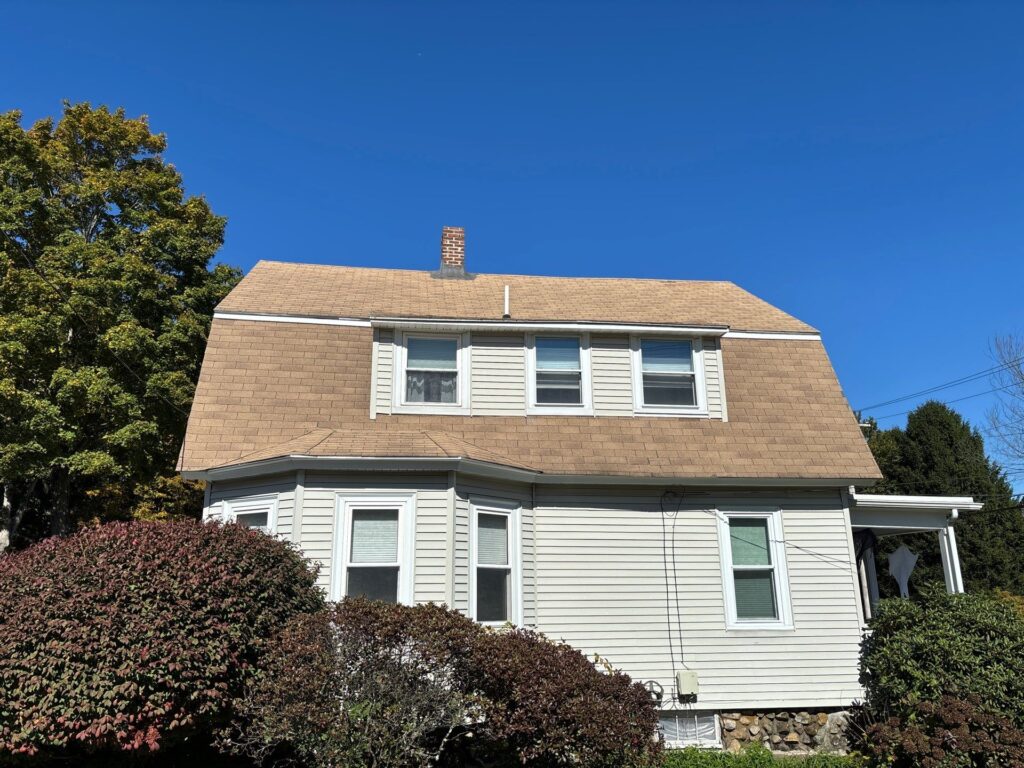
Asphalt shingles are made from a fiberglass mat base saturated with asphalt and coated with ceramic granules. They are lightweight, easy to repair, and come in a vast array of colors.
- 3-Tab Shingles: The most basic and least expensive.
- Architectural (Laminate) Shingles: Thicker, multi-layered, and designed to resemble slate or wood shakes. These are the modern standard, offering superior performance and aesthetic value over 3-tab versions.
Typical Lifespan ~20-30 Years
The lifespan is heavily dependent on quality and climate. Standard 3-tab shingles may last 15–20 years, while high-quality architectural or premium laminate shingles often come with warranties up to 50 years and can realistically last 25–35 years under normal conditions.
Metal Roofing
Metal roofing systems are gaining popularity due to their longevity and high-performance attributes.
Long Lifespan (50+ years), Higher Cost, Durable
Metal roofing materials include steel, aluminum, copper, and zinc, often installed in continuous panels (standing seam) or as shingles.
- Durability: Metal is non-combustible (Class A fire rated), highly resistant to high winds, and effectively sheds ice and snow.
- Energy Efficiency: The reflective surface helps reduce heat gain in the summer, lowering cooling costs.
Higher Upfront Cost
The initial installation cost for metal is significantly higher than asphalt, usually two to three times the price. However, its lifespan of 50–75 years or more means it often carries the lowest life-cycle cost compared to materials that must be replaced every 20–30 years.
Tile and Slate Roofs
These materials are reserved for premium homes where aesthetic appeal and ultimate longevity are paramount.
Premium Look, High Cost, Long Lifespan
- Slate: Natural stone cut into thin tiles. It is incredibly durable, fireproof, and aesthetically unmatched. Properly installed slate roofs can last 100 years or more, essentially making them permanent fixtures.
- Clay and Concrete Tile: Available in barrel shapes or flat styles, offering a distinct Mediterranean or Spanish aesthetic. They are highly resistant to hail and fire.
More Structural Support Needed
The primary drawback of slate and clay/concrete tile is their immense weight. They often require specialized framing and structural reinforcement of the roof deck and rafters, which adds substantial cost to the initial installation.
Flat and Low-Slope Roofs
These roofs, typically found on commercial buildings, modern homes, or garage additions, require specialized waterproofing membranes.
Common in Commercial and Some Residential
Flat roofs (defined as having a pitch of 10 degrees or less) cannot use standard shingles because they rely on gravity to shed water quickly. Instead, they use continuous waterproofing systems:
- TPO/PVC (Thermoplastic Polyolefin/Polyvinyl Chloride): Single-ply membranes that are durable, reflective, and heat-welded at the seams to create a continuous, watertight surface.
- Modified Bitumen (Mod Bit): Asphalt-based roll roofing applied in layers, often torched down or self-adhering.
Different Waterproofing/Sloping Issues
The main challenge with low-slope roofs is drainage. Proper installation requires creating slight slopes (tapered insulation) to direct water to drains, ensuring that water does not pond (collect) on the surface, which can degrade the membrane over time.
How to Choose the Right Roof Type for Your Home
Your final decision should be guided by performance, budget, and design synergy.
Consider Climate (Snow, Wind, Hail)
- High Snow/Ice: Metal roofing is excellent for shedding snow. High-quality architectural asphalt with a robust ice and water shield is also necessary.
- High Winds: Metal and high-quality asphalt shingles (Class H wind rated) secured with six nails per shingle provide superior resistance to uplift.
- Hail: Impact-resistant (Class 4) shingles or metal are recommended in hail-prone regions.
Budget and Maintenance Expectations
If budget is the top priority and you plan to move within 10–15 years, a high-quality architectural asphalt roof is the practical choice. If you seek minimal maintenance and maximum longevity, the higher upfront cost of a metal or tile roof is justified.
Architectural Style of House
The material should complement the home’s design. Shingles are universally adaptable, while slate and tile look best on historic, European, or Spanish/Mediterranean-style homes, and standing seam metal is ideal for modern, industrial, or farmhouse aesthetics.
FAQs
“Which roof type lasts the longest?”
Slate, followed closely by copper and zinc metal roofs. Properly installed slate can last well over a century. However, among modern, accessible materials, standing seam metal offers the longest lifespan (50–75+ years) before requiring significant intervention.
“What type of roof is best for cold climates?”
High-quality architectural asphalt shingles combined with extensive ice and water shield coverage (often required 6 feet up from the eaves) are the best value solution. Standing seam metal is the superior performance solution, as its smooth, seamless surface is designed to rapidly shed heavy snow and ice accumulation.
“Can I mix roof types on one property?”
Yes. It is common practice to use different materials on different slopes or sections. For example, a home might use cost-effective architectural shingles on the main, visible slopes, but use a durable, seamless TPO membrane on a flat-roof porch or garage section that requires specific waterproofing.
Ready to find the perfect roofing solution that protects and enhances your home?
Contact Masterpiece Roofing today for a professional consultation and personalized material recommendations.