
Navigating the world of commercial roofing requires an understanding of how large-scale structures interact with the environment. In Massachusetts, commercial flat roofs must endure extreme temperature swings—from humid 90-degree summers to sub-zero winter nights—all while managing significant snow loads and high coastal winds.
What Is Commercial Flat Roofing?
While often referred to as “flat,” no roof should be perfectly level. Proper design ensures that water moves efficiently toward drainage points.
Low-Slope vs. Flat
Technically, most “flat” roofs are low-slope roofs. They typically have a pitch of at least 1/4 inch per foot. This slight incline is crucial in Massachusetts to prevent “ponding,” where standing water sits for more than 48 hours, potentially voiding material warranties and increasing the risk of structural collapse under snow.
Drainage Systems
Commercial buildings utilize three primary methods to shed water:
- Interior Drains: Centrally located pipes that lead water through the building’s interior.
- Scuppers: Openings in the perimeter walls (parapets) that allow water to exit into downspouts.
- Gutters: Mounted to the edge of the roof, common on smaller commercial footprints.
Common Commercial Flat Roof Systems
Choosing the right membrane depends on your building’s usage (e.g., a restaurant with grease exhaust vs. a cold-storage warehouse).
EPDM (Ethylene Propylene Diene Terpolymer)
Often called “Rubber Roofing,” EPDM is a durable synthetic rubber membrane. It is highly popular in MA because its black surface absorbs heat, helping to melt snow faster in the winter.
TPO (Thermoplastic Polyolefin)
TPO is a single-ply white membrane that is highly reflective. It is excellent for “Cool Roof” initiatives, significantly reducing air conditioning costs during hot Massachusetts summers. Its seams are heat-welded, making them exceptionally strong.
PVC (Polyvinyl Chloride)
Similar to TPO but more resistant to chemicals, oils, and animal fats. This is the gold standard for restaurants or food processing plants. It is highly durable and has a long track record of performance in harsh climates.
Modified Bitumen
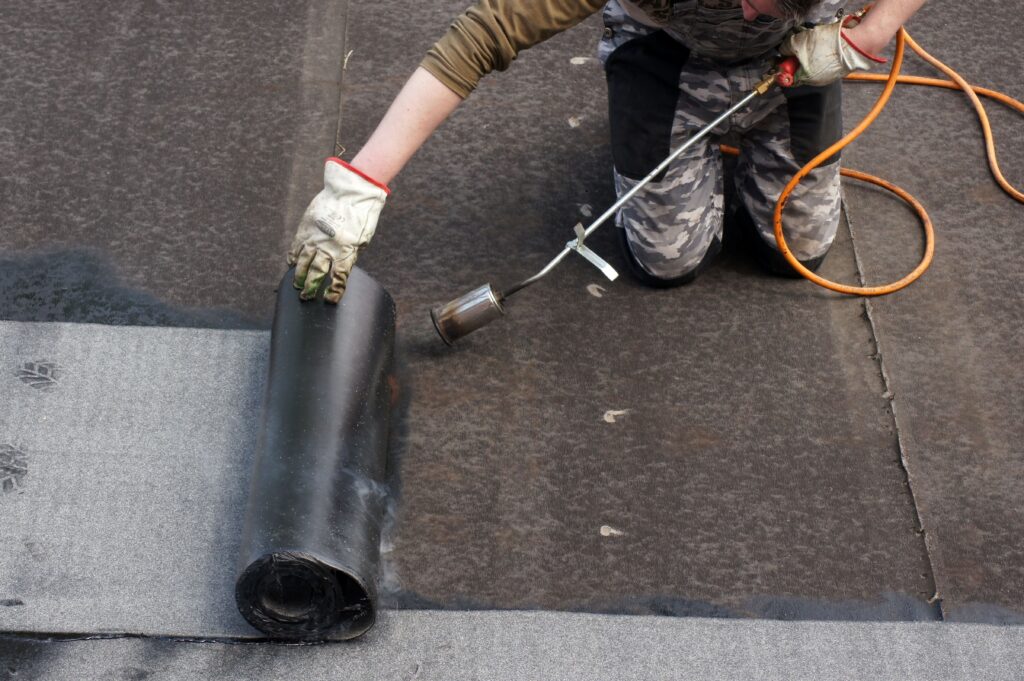
An evolution of the old “built-up” (tar and gravel) roofs. It consists of asphalt layers reinforced with fiberglass or polyester. It is extremely tough and stands up well to high foot traffic if you have heavy HVAC equipment on the roof.
Why Flat Roofs Are Popular for Commercial Buildings
- Cost-Effectiveness: They require less material than sloped roofs and are generally faster to install.
- Equipment Storage: Flat roofs provide a stable platform for heavy HVAC units, solar arrays, and satellite equipment.
- Internal Space: Without sloped ceilings, the top floor of a commercial building can be fully utilized for storage or office space.
Lifespan of Commercial Flat Roofs
- EPDM: 20–30 years
- TPO: 15–25 years
- PVC: 20–30+ years
- Modified Bitumen: 10–20 years
- Note: In MA, these lifespans can be shortened by 15-20% if preventative maintenance is neglected.
Maintenance and Inspection Requirements
Commercial warranties often require documented inspections to remain valid. At a minimum, drains must be cleared of debris twice a year (after leaf fall and after the final spring thaw). In Massachusetts, checking for seam separation after a deep freeze is essential to preventing catastrophic leaks during the spring rains.
FAQs
How often should flat roofs be inspected?
At least twice a year. In New England, a “Fall Prep” and “Spring Recovery” inspection schedule is the industry standard.
Which flat roofing material lasts longest?
PVC and high-thickness EPDM (90 mil) generally offer the longest lifespans, often exceeding 30 years with proper maintenance.
What’s the most cost-effective system?
EPDM is typically the most cost-effective in terms of initial installation and long-term durability for the Massachusetts climate.
Commercial Roofing Contractors in MA
When selecting a contractor for your commercial asset, ensure they are manufacturer-certified for the specific system (TPO, EPDM, etc.) you intend to install. This certification is often the only way to secure a “No Dollar Limit” (NDL) warranty.
Request a Commercial Roof Survey & Quote!