
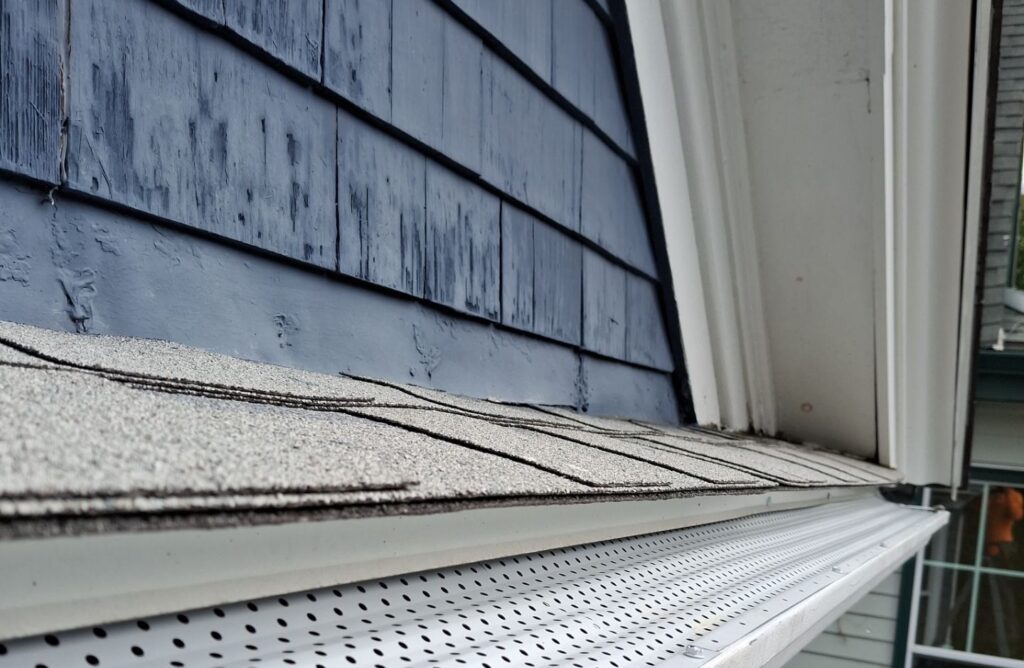
While roofing systems and siding systems are designed to manage water independently, they are fundamentally connected at the eaves, gables, and junctions. An undetected or prolonged roof leak can absolutely lead to significant damage to the vertical siding and the underlying wall structure. When the roof’s primary defenses fail, water can be directed in unnatural ways, often infiltrating areas where the siding and house wrap are not designed to be saturated.
Masterpiece Roofing provides integrated exterior solutions, ensuring that roof failures are addressed immediately, protecting your valuable siding and wall assemblies from secondary moisture damage.
How Roof Leaks Lead to Siding & Wall Damage
Roof leaks and compromised flashing can divert large volumes of water down the exterior walls, breaching the secondary defense layers.
Water Running Under Eaves or Along Siding Can Infiltrate Behind Siding Panels
When a roof leak occurs, water follows the path of least resistance. Instead of dripping straight down into the gutter, water can seep horizontally back along the underside of the eave or fascia board.
- Wick Effect: Once the water saturates the fascia or soffit, gravity pulls it down the wall. This excess moisture finds its way behind the vinyl, wood, or fiber cement siding through seams, joints, or nail holes.
- Gutter Overflow: Clogged or damaged gutters, often exacerbated by roof runoff, can spill directly onto the upper siding panels, overwhelming the flashing system.
Leaks Cause Wood Rot, Mold, Structural Damage Behind Siding
Once water breaches the sheathing or house wrap barrier behind the siding, the following severe issues occur:
- Wood Rot: The underlying sheathing and structural framing (studs) become saturated, leading to rot. This compromises the home’s structural integrity, particularly around windows and doors where water concentrates.
- Mold and Mildew: Persistent dampness creates an ideal environment for mold growth inside the wall cavity, posing health risks and requiring expensive remediation.
- Insulation Degradation: Wetting the wall insulation (fiberglass, cellulose, etc.) reduces its thermal performance, compromising the home’s energy efficiency.
Signs of Roof Leak Impact on Siding
Homeowners should monitor the siding directly below the roofline for these telltale indicators that a roofing issue is actively damaging the wall structure.
Staining or Discoloration on Siding or Beneath Eaves
Dark streaks or mineral deposits on the exterior of the siding, particularly where the roof meets the wall (the eaves and rake boards), are strong evidence that water is overflowing or escaping the roof system abnormally. This is often the first visible sign of a hidden problem.
Warped or Softened Siding Near Roof Line
- Wood Siding: Paint will bubble, blister, or peel. The wood planks themselves may swell, warp, or feel soft and spongy to the touch due to advanced moisture intrusion and rot.
- Vinyl Siding: While vinyl doesn’t rot, chronic saturation of the underlying wood can cause the sheathing to swell, making the vinyl panels look wavy, or causing the vinyl to crack prematurely due to stress.
Peeling Paint or Blistering Siding Surface
On painted wood or trim, the appearance of peeling paint often means the wood is wicking moisture from the inside out. When the interior wood of the wall is wet due to a leak, it pushes the paint away from the surface as it tries to dry.
Prevention & Repair Strategies
Preventing siding damage is achieved by maintaining a healthy, watertight roof assembly.
Inspect Roof-Siding Junctions, Flashing, and Gutters
Regularly check the perimeter of your roof where it meets the vertical walls (headwall flashing and step flashing). Ensure these metal flashings are fully integrated and not pulling away. Keep all gutters clean to ensure meltwater and rain are correctly channeled away from the siding.
Fix Roof Leaks Promptly to Protect Siding Investment
As soon as a roof leak is detected (via attic inspection or ceiling stain), it must be fixed by a professional roofer immediately. The longer the leak persists, the more extensive the secondary damage to the sheathing and siding will become.
Use Proper Siding Underlayment, Ensure Water Shedding Away from Siding
When installing new siding, ensure the contractor applies a quality house wrap beneath it. For ultimate protection, a rain-screen system or drainable house wrap creates a small air space behind the siding, allowing any water that gets past the exterior cladding to drain harmlessly away.
FAQs
“Does siding need to be replaced if the roof leaks?”
Not always, but often. If a roof leak has been active for a long time, the underlying structural wood behind the siding (sheathing, studs) may be rotten, requiring removal and replacement of both the affected siding and the underlying structure. If the leak was caught early and only caused surface staining on the siding, simple cleaning or repair might suffice.
“How quickly can a roof leak damage siding?”
In humid conditions, water infiltration can lead to significant wood rot and mold within 6 to 12 months. Wood rot can begin within weeks of consistent saturation. The longer the roof leak goes unfixed, the higher the probability that the siding, sheathing, and insulation will require costly replacement.
“What warranties cover siding damage from roof issues?”
Siding damage caused by a roof failure is typically not covered by the siding manufacturer’s warranty. The siding warranty covers defects in the material itself. This type of damage falls under the workmanship warranty of the original roofing contractor, or more commonly, your homeowner’s insurance policy, provided the original roof leak was due to a covered peril (e.g., wind, hail).
Protect your home’s entire exterior envelope by ensuring a watertight roof.
Contact Masterpiece Roofing today for a combined roof and siding inspection to identify and fix all moisture intrusion points.