
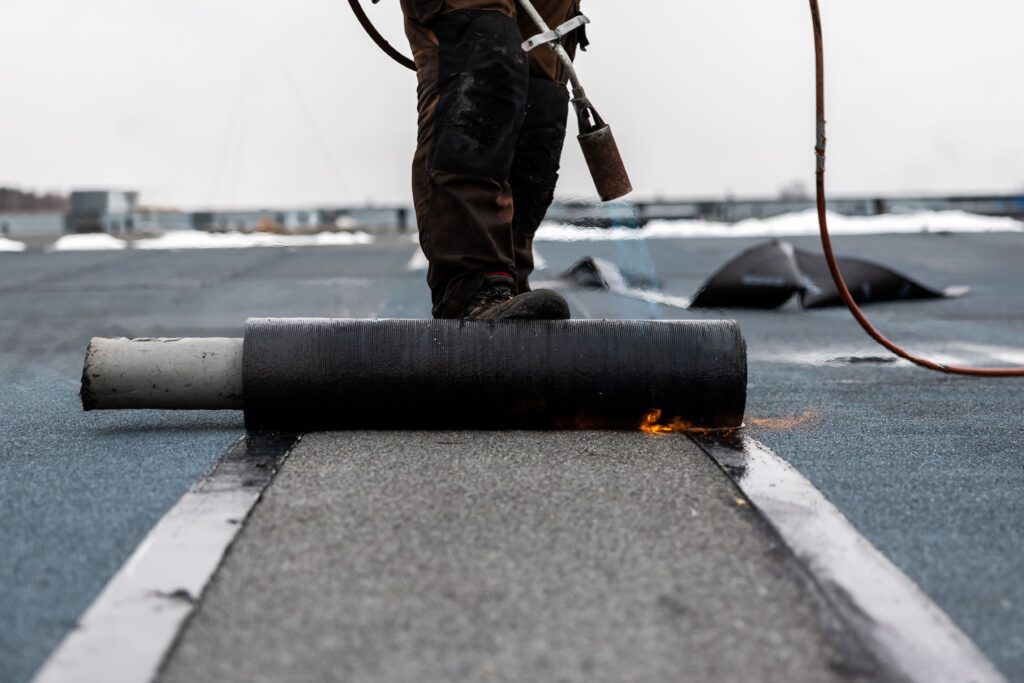
In the United States, commercial flat roofs are subjected to extreme thermal expansion, high winds, and heavy precipitation. Maintaining these systems is vital for protecting the inventory, equipment, and occupants within. Repairing a commercial roof is a specialized process that requires an understanding of different membrane types—such as TPO, EPDM, and PVC—and the specific ways they fail over time.
Quick Answer: Most Repairs Focus on Seams, Flashing, and Ponding Areas
The vast majority of commercial roof leaks do not occur in the field of the membrane itself, but rather at the transition points. Repairs typically involve re-securing failed seams, reinforcing flashing around HVAC curbs or pipes, and addressing areas where water has begun to “pond” due to structural settling or clogged drainage systems.
Common Commercial Flat Roof Issues
Understanding the root cause of a leak is the first step in a successful repair. Most issues fall into three categories:
Ponding Water
A “pond” is defined by U.S. roofing standards as water that remains on the roof surface for more than 48 hours after a rain event.
- The Risk: Standing water acts as a magnifying glass for UV rays, accelerating the degradation of the membrane. The weight of the water can also cause the roof deck to sag further, creating a cycle of increasing damage.
- The Fix: Often involves installing “tapered insulation” to redirect water or adding auxiliary drains.
Membrane Tears and Punctures
Commercial roofs are often high-traffic areas for HVAC technicians and maintenance crews.
- Causes: Dropped tools, heavy equipment movement, or flying debris during storms can create small punctures.
- The Risk: Even a “pinhole” leak can saturate the insulation board beneath the membrane, leading to mold and structural rot long before a drip is seen inside the building.
Flashing Failure
Flashing is the material used to seal the edges of the roof and any penetrations (like vents, chimneys, or skylights).
- Thermal Movement: Because metal flashing and rubber membranes expand at different rates, the sealant between them can crack over time.
- The Risk: This is the #1 source of leaks in commercial buildings. If the flashing pulls away from a parapet wall, water can flow directly behind the roofing system.
Repair Process Overview
A professional repair follows a rigorous four-step protocol to ensure the patch lasts as long as the original roof.
1. Professional Inspection
Before any tools are lifted, a thorough assessment is required. Professionals often use Infrared Thermography to detect moisture trapped beneath the surface that isn’t visible to the naked eye. This ensures you aren’t patching a hole while leaving a gallon of water trapped underneath.
2. Surface Cleaning and Preparation
The most critical step in a flat roof repair is the “prep.”
- For TPO/PVC: The membrane must be scrubbed with specialized cleaners to remove the “weathering film” (oxidation).
- For EPDM: A primer is applied to the rubber to create a chemical bond with the patch. If the surface isn’t surgically clean, the repair will fail within months.
3. Patch Application
Depending on the material, the patch is applied using one of two methods:
- Heat Welding: For TPO or PVC, a hot-air welder is used to fuse the patch to the existing roof at temperatures exceeding 800°F, creating a single, monolithic piece of material.
- Pressure-Sensitive Adhesive: For EPDM (rubber) roofs, a heavy-duty adhesive patch is rolled onto the primed area with a weighted silicone roller.
4. Seal and Reinforce
Once the patch is down, “lap sealant” or “edge caulk” is applied to the perimeter of the patch. This provides a secondary layer of protection against “wind uplift,” which can otherwise peel a new patch right off the roof during a storm.
When Full Replacement Is Needed
While repairs are cost-effective, they are not always the right choice. A full replacement is usually recommended if:
- Saturation: More than 25% of the roof’s underlying insulation is wet.
- Age: The membrane has reached the end of its 20-25 year life cycle and has become brittle.
- Safety: The structural decking has been compromised by long-term water exposure.
FAQs
Can flat roofs be patched permanently?
Yes. If the underlying insulation is dry and the patch is applied using the correct chemical primer or heat-welding technique, the repair can last as long as the rest of the roof system.
How much does commercial roof repair cost?
Costs vary based on the extent of the damage and the height of the building. Minor repairs usually start around $500–$1,500, while significant flashing overhauls can cost several thousand. It is significantly cheaper than the average $15,000–$50,000+ cost of a full commercial replacement.
Does insurance cover damage?
Typically, insurance covers “sudden and accidental” damage, such as hail or wind-blown debris. It rarely covers damage caused by “wear and tear” or “lack of maintenance” (such as neglected ponding water).
Commercial Roof Repair Services in MA
Navigating the complexities of commercial roofing in Massachusetts requires a contractor who understands the local building codes and the impact of the freeze-thaw cycle. Our team provides expert diagnostic services and high-quality repairs for all major commercial roofing systems.
Don’t let a small leak turn into a structural disaster. Contact us today for a comprehensive roof inspection and repair estimate.