
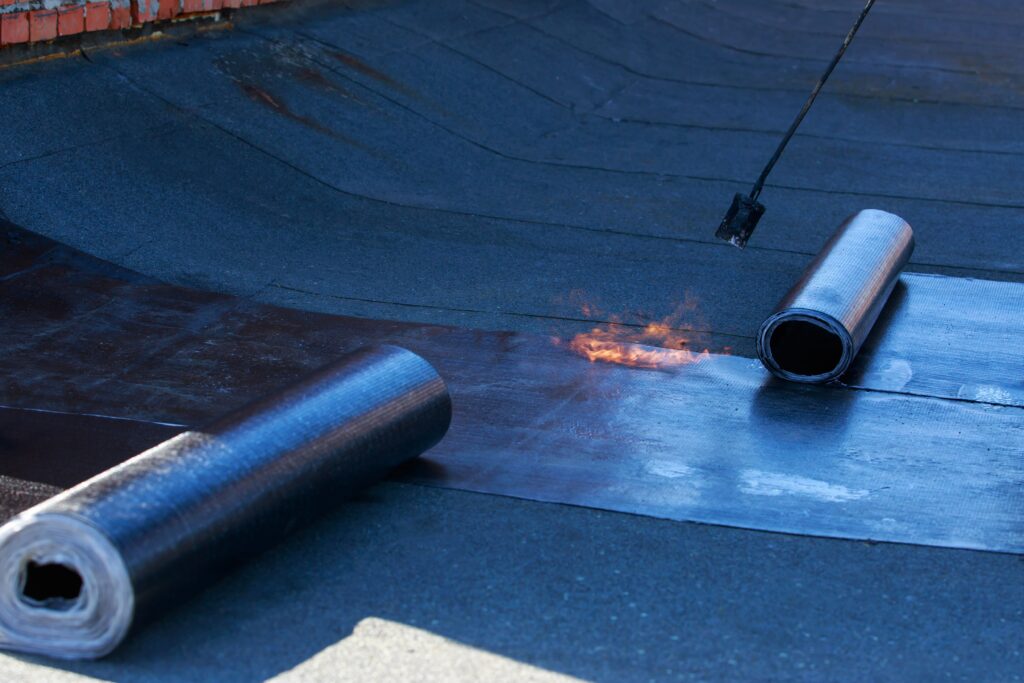
When observing the skyline of any major American industrial park or commercial district, a common architectural theme emerges: the flat roof. While residential homes in the U.S. favor steep slopes to shed rain and snow, the commercial sector has almost entirely embraced the low-slope or “flat” design. This preference is not merely aesthetic; it is a calculated decision based on engineering efficiency, long-term maintenance logistics, and economic scaling.
Quick Answer: Cost, Space, and Utility Access
The primary reason flat roofs dominate the commercial landscape is optimization. Larger buildings—such as big-box retailers, warehouses, and office complexes—require massive amounts of square footage. A sloped roof on a 50,000-square-foot building would be impractically tall and expensive. Flat roofs provide a cost-effective way to cover large areas while creating a functional “extra floor” for mechanical equipment, effectively maximizing every square inch of the property’s footprint.
Structural Advantages
The structural logic of a flat roof aligns perfectly with the needs of modern American commerce. From the initial build to the installation of heavy machinery, the flat plane offers several key benefits.
Easier HVAC Installation
In the United States, commercial climate control is a massive undertaking. Larger buildings require heavy-duty HVAC units (often called RTUs or Rooftop Units) that would be impossible to mount on a sloped surface.
- Weight Distribution: A flat roof allows these multi-ton units to sit securely on specialized “curbs” that distribute weight directly to the building’s structural steel.
- Accessibility: Technicians can easily walk the roof to perform repairs or routine maintenance without the need for specialized scaffolding or rappelling gear.
- Vibration Control: Modern flat roof engineering includes reinforced points to dampen the vibration of large fans and compressors, preventing noise from echoing through the building.
Lower Material Costs
A flat roof is mathematically the most efficient way to cover a space. Because a flat surface has less total surface area than a sloped roof covering the same square footage, significantly fewer materials are required.
- Reduced Membrane Usage: Whether using TPO, EPDM, or PVC, the amount of material needed is minimized.
- Simpler Framing: Flat roofs utilize horizontal steel beams and metal decking, which are faster to manufacture and install than complex truss systems required for high-pitched roofs.
Simpler Construction
Time is money in commercial development. Flat roofs allow for a much faster construction timeline.
- Staging: Contractors can use the roof itself as a staging area for materials during the construction process.
- Safety: Working on a flat surface is inherently safer for crews, reducing the insurance premiums and safety-related delays that often accompany steep-slope projects.
Maintenance Benefits
Maintenance on a commercial building is an ongoing operational expense. Flat roofs simplify this by providing a stable, walkable platform.
- Drainage Management: Rather than letting water fall off the edges (which can cause foundation erosion in large buildings), flat roofs use sophisticated internal drains and scuppers to direct water precisely where the municipal storm system expects it.
- Leak Detection: Modern membranes and infrared scanning technology make it easier to pinpoint a leak on a flat surface compared to a sloped one, where water often “travels” far from the source before appearing inside.
Energy Efficiency Considerations
In the U.S., commercial buildings are often subject to strict energy codes. Flat roofs are highly adaptable for energy-saving technologies:
- Cool Roofs: Highly reflective white membranes (TPO/PVC) reflect up to 85% of solar radiation, drastically lowering cooling costs in the summer.
- Solar Arrays: Flat roofs are the ideal foundation for solar panels. They allow for easy “ballasted” mounts that sit on the roof without penetrating the membrane, maximizing renewable energy production.
- Insulation Options: High-R-value polyiso insulation boards can be layered easily on a flat deck to meet or exceed modern thermal requirements.
Are Flat Roofs Truly Flat?
No roof should ever be perfectly flat. In the industry, these are known as low-slope roofs.
To meet American building codes, a “flat” roof must have a minimum slope of 1/4 inch per foot. This slight pitch is often built into the structure or created using “tapered insulation” (foam boards that are thicker on one side). This ensures that water moves toward the drains and prevents “ponding,” which is the #1 cause of premature membrane failure.
FAQs
Do flat roofs leak more?
Flat roofs do not inherently leak more than sloped roofs; however, they require more diligent drainage maintenance. If drains are kept clear of debris, a modern single-ply membrane is just as water-tight as any residential shingle roof.
Are flat roofs cheaper?
Yes, on a per-square-foot basis, flat roofs are generally the most affordable option for large-scale buildings due to reduced material needs and faster installation labor.
How long do commercial flat roofs last?
Depending on the material and maintenance:
- EPDM: 20–30 years
- TPO/PVC: 20–25 years
- Modified Bitumen: 15–20 years
Commercial Roofing Services in MA
If you own or manage a commercial property in Massachusetts, your roof is your first line of defense against the harsh New England elements. Whether you need a comprehensive inspection, a minor repair, or a full system replacement, our team specializes in the high-performance membranes required to withstand local temperature fluctuations.
Contact us today for a professional roof assessment and ensure your commercial asset remains protected for decades to come.