
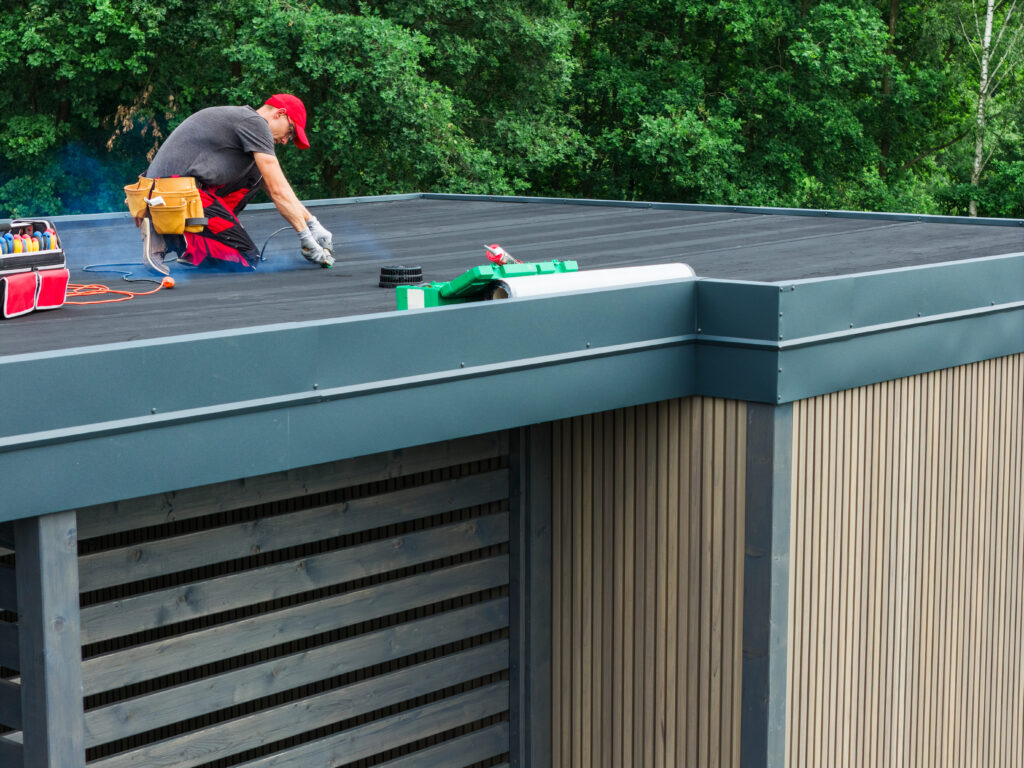
Flat and low-slope roofs in Massachusetts—whether on a residential porch or a commercial building—often utilize EPDM (Ethylene Propylene Diene Monomer). While rubber is incredibly durable, the harsh New England climate can eventually lead to failures. Understanding how to address these issues early can save you from costly interior water damage.
Quick Answer: Most EPDM Repairs Focus on Seams and Punctures
While the rubber membrane itself is designed to last 20–30 years, the seams (where two sheets meet) and penetrations (pipes, vents, or chimneys) are the most common points of failure. Most repairs involve cleaning the area, applying a specialized primer, and using an EPDM patch or seam tape to re-establish a watertight seal.
Common Rubber Roof Problems
In Massachusetts, the weight of winter snow and the expansion of ice can exacerbate minor flaws in a rubber roof.
Seam Separation
Over time, the adhesives used to join rubber sheets can dry out and lose their bond. Once a seam begins to “smile” or gap, water can be pulled underneath via capillary action, rotting the insulation and decking below.
Punctures
Falling branches during Nor’easters or dropped tools during HVAC maintenance can easily puncture a rubber membrane. Unlike shingles, a single small hole in a flat roof can lead to significant pooling and leaking.
Shrinkage
EPDM is prone to slight shrinkage over decades. If not properly fastened at the perimeter, the rubber can pull away from the edges of the roof (the parapet walls), creating tension that eventually tears the membrane or pulls the flashing loose.
Flashing Failure
Flashing is the metal or reinforced rubber used to seal the edges and transitions of the roof. If the sealant at these transition points cracks, water will find its way into the building envelope.
How to Repair a Rubber Roof
A proper rubber roof repair is a multi-step chemical process. Simply slathering “roof tar” or “wet patch” on EPDM is a common mistake that can actually damage the rubber further.
1. Cleaning the Damaged Area
The repair site must be scrubbed with a specialized EPDM cleaner or splined with a scrub pad. Any dirt, oxidation, or atmospheric “dust” will prevent the new patch from bonding.
2. Applying Primer and Patch
Once clean, a solvent-based primer is applied. This “tackifies” the rubber. A piece of self-adhering EPDM cover tape or a “peel-and-stick” patch is then rolled onto the area using a heavy steel roller to ensure a permanent vulcanized bond.
3. Sealing Seams
For seam repairs, old adhesive is removed, and new seam tape or lap sealant is applied. In cold MA winters, specialized “winter-grade” sealants are often required to ensure the bond sets correctly.
When Repair Isn’t Enough
A repair is likely a temporary fix if:
- Widespread Adhesion Failure: If seams are popping open across the entire roof, the adhesive has reached the end of its life.
- Wet Insulation: If the roof feels “spongy” when you walk on it, water has saturated the insulation boards. A patch will not fix the trapped moisture, which will lead to mold and structural rot.
- Significant Ponding: If water sits on the roof for more than 48 hours after rain, the roof may need to be tapered or structurally leveled during a full replacement.
Cost of Rubber Roof Repair in MA
In Massachusetts, professional rubber roof repairs generally cost between $400 and $1,200 for localized issues.
- Minor Punctures: $400 – $600.
- Major Seam Restoration: $800 – $1,500+ depending on the linear footage.
- Full Replacement: Can cost $10 – $18 per square foot depending on the complexity and insulation requirements.
FAQs
Can you patch EPDM yourself?
You can buy DIY EPDM kits, but caution is required. You must use EPDM-specific products. Standard asphalt-based roofing cements contain petroleum distillates that will dissolve and destroy a rubber roof within months.
How long does a repair last?
A professional repair using the proper primer and a vulcanized patch can last the remaining life of the roof (often 10+ years).
Does insurance cover flat roof damage?
Insurance typically covers “sudden and accidental” damage, such as a tree limb falling on the roof. They rarely cover leaks caused by “wear and tear” or “neglected maintenance” like failed seams.
Flat Roof Repair Services in Massachusetts
Don’t let a small seam gap turn into a full ceiling replacement. Our team specializes in EPDM, TPO, and PVC flat roof systems across the Bay State. We provide infrared moisture detection to find hidden leaks before they cause structural damage.
Need an expert eye on your flat roof? Schedule a Professional Flat Roof Inspection Today!