
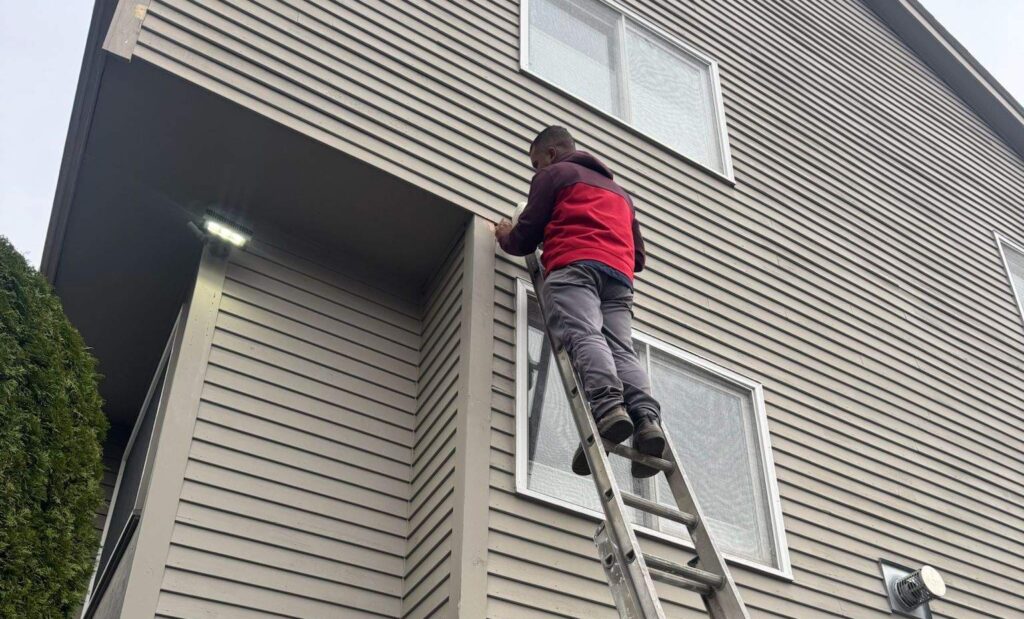
When a severe storm hits, homeowners often focus their attention upward toward the roof. However, your home’s siding is the primary vertical barrier protecting your structure from the elements. In the United States, high-wind events—ranging from standard thunderstorms to more severe atmospheric disturbances—can compromise your siding in ways that aren’t always visible from the curb. At Masterpiece Roofing, we emphasize that siding integrity is just as vital as a leak-free roof.
Quick Answer: Wind Damage Often Looks Small But Can Let Water Behind the Siding
Do not let a “missing piece” fool you into thinking the damage is merely cosmetic. Siding is designed to function as a system; when wind pulls at a panel, it creates gaps that allow driving rain to bypass the protective layer. Once water gets behind the siding, it begins to rot the wooden sheathing and can lead to mold growth long before you see a stain on your interior drywall.
Why quick action prevents bigger repairs
In the U.S., most residential homes are built with wood-frame construction and oriented strand board (OSB) or plywood sheathing. These materials are highly susceptible to moisture. By addressing wind damage immediately, you prevent the “domino effect” where moisture infiltration leads to structural rot, insulation failure, and expensive mold remediation.
Signs of Wind Damage to Siding
Wind doesn’t always rip panels off; sometimes, it simply weakens the fastening system, leaving your home vulnerable to the next storm.
Loose, missing, or flapping panels
The most obvious sign of damage is a panel that has completely detached or is visibly hanging. Even if the panel is still attached, listen for “chattering” or flapping sounds during a breeze. This indicates that the nails or “nails-slots” have been enlarged or pulled through, meaning the panel is no longer providing a thermal or moisture seal.
Cracks, buckling, warping, or lifted edges
For vinyl siding, wind pressure can cause “star cracks” or long horizontal fractures. For fiber cement or wood siding, wind can cause panels to buckle or warp. Check for “lifted edges”—sections where the siding has pulled away from the wall just enough to break the interlocking seal between courses.
Exposed house wrap or moisture marks
If you can see the “Tyvek” or house wrap beneath your siding, your home is in an emergency state. While house wrap is water-resistant, it is not waterproof and is not designed for long-term exposure to UV rays or direct rain. Look for dark watermarks or “bleeding” on the wrap, which suggests water is already pooling behind the panels.
Hidden damage (behind panels and at corners)
Wind often creates a “suction” effect (negative pressure) that can pull the siding away from the wall and then snap it back into place. This can damage the vapor barrier or the flashing around windows and corners without leaving a visible mark on the siding surface. A professional inspection often involves checking the “pull-strength” of panels to ensure they haven’t been loosened from the studs.
What to Do After a Wind Storm
Safety check + temporary protection steps
Before inspecting your home, ensure there are no downed power lines near the structure. If you have large sections of siding missing, you may need to apply a temporary “tarping” or use heavy-duty plastic sheeting to cover exposed sheathing. This is a stop-gap measure to prevent immediate water entry.
Documenting damage (photos, dates, affected elevations)
For insurance purposes, documentation is everything.
- Photos: Take wide shots of the entire “elevation” (the side of the house) and close-ups of specific cracks or gaps.
- Dates: Record the date and time of the storm.
- Elevations: Note which direction the wind was blowing (e.g., “North-facing wall suffered the most impact”).
Repair vs Replace: How to Decide
Small isolated damage vs widespread issues
If a single panel was struck by a flying branch, a simple repair is usually sufficient. However, if wind has “unlocked” multiple courses across a large area, the structural integrity of that entire wall’s siding system may be compromised, necessitating a full elevation replacement.
Matching challenges and discontinued products
This is the most common hurdle in siding repair. Vinyl and metal siding colors fade over time due to UV exposure. Furthermore, manufacturers frequently discontinue specific profiles or colors. In many cases, even if you find the same brand, the new “match” will be significantly brighter than the weathered original, leading many homeowners to opt for a full replacement to maintain curb appeal and property value.
FAQs
Does homeowners insurance cover wind-damaged siding?
In most standard U.S. homeowners insurance policies, wind is a covered peril. If the damage was caused by a specific wind event, the cost of repair or replacement (minus your deductible) is typically covered. Some policies even have “matching” clauses that require the insurer to replace the entire house if a matching product cannot be found for a small repair.
Can wind-damaged siding cause leaks?
Yes. Siding is the “first defense” against bulk water. When wind lifts or cracks siding, rain is driven directly into the wall cavity. Over time, this water seeps through the sheathing and into your wall insulation, eventually reaching your interior studs and drywall.
How quickly should siding be repaired after a storm?
Repairs should be initiated as soon as it is safe to do so. Ideally, you should have a professional inspection within 24–48 hours of the storm to prevent moisture from sitting against the house wrap or sheathing for an extended period.
Don’t let a “small” gap turn into a major mold problem. Contact Masterpiece Roofing for a comprehensive wind-damage assessment and protect your home’s foundation today.