
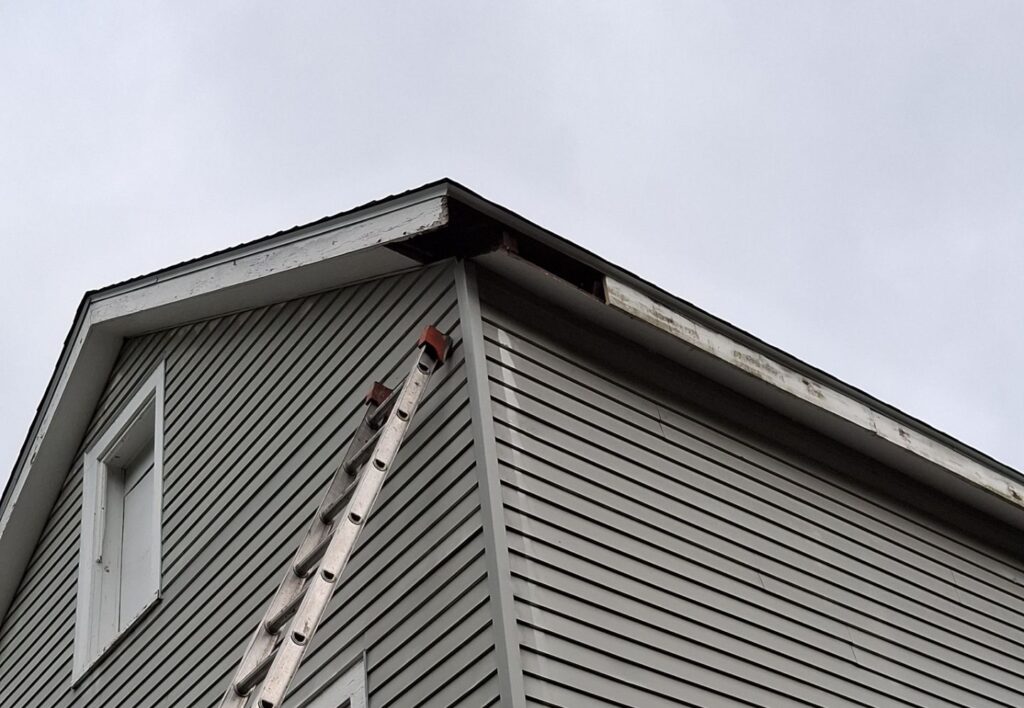
Maintaining the integrity of your home’s roofline is essential for preventing long-term structural issues. Because eaves are exposed to the harshest elements, they eventually require professional attention. Whether you are dealing with a small patch of localized rot or a widespread ventilation failure, understanding the mechanics of eave repair can help you make the right choice for your property.
Quick Answer: Minor Damage Can Be Repaired—Severe Rot Requires Replacement
In most American residential structures, localized issues like small cracks, peeling paint, or a single soft spot on a fascia board can be addressed with targeted repairs. However, if the wood rot has compromised more than 25% of the board or has traveled into the rafter tails (the structural bones of your roof), a full replacement is the only way to ensure the safety of your home.
How professionals assess eave damage
A professional inspection goes beyond the surface. Technicians use moisture meters and “probe tests” to determine if the wood is structurally sound. They also check the drip edge—the metal flashing that should direct water into the gutters. If the drip edge is missing or incorrectly installed, any repair will be temporary, as water will continue to seep behind the new wood.
Step-by-Step Roof Eave Repair Overview
Repairing eaves is a precise process that requires working at heights and handling heavy materials. Here is how a professional restoration typically unfolds:
Removing Damaged Sections
The process begins with the removal of the gutters. Once the gutters are out of the way, the technician carefully cuts away the rotted sections of the fascia or prys out sagging soffit panels. It is critical to remove several inches of “healthy” wood beyond the visible rot to ensure no fungal spores remain.
Replacing Fascia or Soffit
The new material—often kiln-dried lumber, PVC, or fiber cement—is cut to fit the gap perfectly. Professionals ensure that joints are mitered (cut at an angle) to prevent water from easily entering the seams. If the soffit is being replaced, this is the ideal time to upgrade to continuous ridge and soffit vents to improve attic airflow.
Sealing and Repainting
Once the new wood is installed, all gaps and nail holes are filled with high-grade exterior caulk. A specialized wood primer is applied to prevent “tannin bleed,” followed by two coats of high-quality exterior acrylic latex paint. This seal is what protects the new investment from the humidity and UV rays typical of North American climates.
When Roof Eaves Need Replacement
Structural Wood Rot
When rot affects the rafter tails, the eaves can no longer support the weight of the gutters, especially when filled with rain or ice. If you see the roofline dipping or if the wood crumbles when touched, the damage is structural and requires a full replacement of the eave system and potentially the reinforcement of the rafters.
Repeated Water Intrusion
If you find yourself repairing the same section of eave every few years, the issue is likely a systemic failure of the roof’s drainage system. In these cases, replacing the eaves with more durable, moisture-resistant materials like composite or aluminum is a more cost-effective long-term solution than constant wood patching.
Preventing Future Eave Damage
Proper Gutter Maintenance
The most effective way to protect your eaves is to keep your gutters clear. In the U.S., homeowners should clean their gutters at least twice a year—once in late spring and once in late fall. Installing gutter guards can also significantly reduce the volume of debris that leads to fascia rot.
Ice Dam Prevention Strategies
For homes in Northern states, ice dams are the leading cause of eave failure. Prevention involves a two-pronged approach: increasing attic insulation to keep the roof deck cool and ensuring the soffit vents are completely unobstructed. Additionally, installing a water and ice shield membrane under the shingles during your next roof upgrade provides a secondary layer of protection.
FAQs
Can roof eaves be repaired without replacing the roof?
Yes. In most cases, eaves can be accessed and repaired from the exterior without disturbing the main roofing shingles. However, if the rot has moved into the roof deck, a small portion of the bottom row of shingles may need to be lifted and replaced.
How long does eave repair take?
A standard localized repair (10–20 feet of fascia) can usually be completed in a single day. A full eave replacement for an average-sized suburban home may take 2 to 3 days, depending on the height of the house and the complexity of the trim.
Should eaves be inspected annually?
Yes. An annual visual inspection—ideally while cleaning your gutters—can catch “hairline” cracks or early signs of pest entry before they turn into expensive structural repairs.
Restore Your Home’s First Line of Defense
Damaged eaves aren’t just an eyesore; they are a vulnerability in your home’s armor. At Masterpiece Home Services, we provide expert craftsmanship to ensure your eaves are beautiful, breathable, and built to last.
Stop rot in its tracks and protect your investment. Contact us today for a comprehensive eave health assessment and professional repair estimate!