
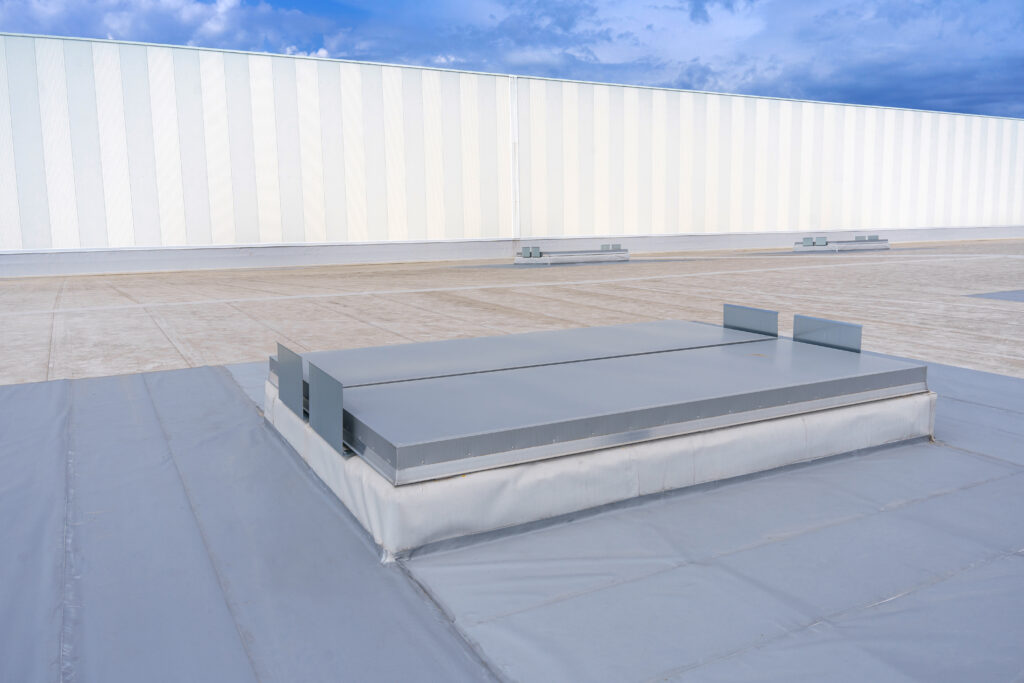
Choosing a roof hatch is not a matter of simply picking a door for your roof. The right hatch must balance structural integrity, ease of use, and specific access requirements. Whether you are moving small tools or large pieces of mechanical equipment, the architecture of the hatch plays a vital role in the functionality of your building’s envelope.
At Masterpiece Roofing, we help clients navigate the complexities of vertical access to ensure their selection aligns with US building codes and long-term operational goals.
Quick Answer: Usage and Roof Design Dictate the Best Type
The “best” roof hatch is determined by what needs to pass through it and how often. A hatch used once a year for a drain inspection has different requirements than one used weekly for high-traffic HVAC maintenance. Furthermore, the pitch of your roof and the available internal clearance for ladders or stairs will dictate the specific geometry of the hatch you require.
Why One-Size-Fits-All Doesn’t Work
Every building has a unique “thermal signature” and structural capacity. Installing a heavy galvanized steel hatch on a roof deck not designed for that load—or using a small single-leaf hatch when you need to move filters and motors—leads to increased maintenance costs and potential safety hazards. Customization is often necessary to ensure the hatch integrates perfectly with your specific roofing membrane.
Main Types of Roof Access Hatches
Single-Leaf Hatches
This is the most common configuration found on commercial rooftops across the US. It consists of a single hinged cover that opens to a 90-degree angle.
- Best For: Personnel access via fixed ladders or ship’s stairs.
- Advantage: Simple design with fewer moving parts, making it highly reliable and easy to seal against the elements.
Double-Leaf Hatches
Double-leaf hatches feature two covers that meet in the center. These are typically used when a larger clear opening is required than a single leaf can provide.
- Best For: Equipment access. If you need to hoist large items from the interior to the roof (or vice versa), the wide aperture of a double-leaf hatch is essential.
- Advantage: Allows for massive clear openings while keeping the individual covers manageable in weight.
Automatic and Spring-Assisted Hatches
Modern safety standards emphasize “one-hand operation.” Spring-assisted hatches use compression springs (usually encased in telescopic tubes) to do the heavy lifting for the user.
- Automatic Options: Some hatches are integrated into building automation systems (BAS) for smoke ventilation. In the event of an alarm, these hatches open automatically to vent heat.
- Advantage: Minimizes the physical strain on technicians, reducing the risk of falls or back injuries during opening.
Material Options
Aluminum
Aluminum is highly favored in coastal regions or areas with high humidity due to its natural resistance to corrosion.
- Pros: Lightweight, which puts less stress on the roof deck and makes operation easier. It does not require frequent painting or coating to prevent rust.
- Cons: Generally has a higher upfront cost than steel.
Galvanized Steel
For industrial environments where durability is the primary concern, galvanized steel is the industry standard.
- Pros: Exceptionally strong and impact-resistant. It is less likely to dent if struck by tools or equipment.
- Cons: Heavier than aluminum, requiring more robust spring assistance. Over decades, if the galvanization is scratched, it may require maintenance to prevent oxidation.
Choosing the Right Roof Access Hatch
Insulation Needs
In the US, energy codes (such as ASHRAE 90.1) often dictate the minimum R-value for roof components. If your building is climate-controlled, an uninsulated hatch will become a “thermal bridge,” causing condensation to drip onto your interior floors and driving up energy bills. Always look for hatches with at least 1″ or 2″ of rigid fiberboard or polyisocyanurate insulation.
Frequency of Access
- High Frequency: Invest in aluminum with high-cycle hardware and heavy-duty gas struts.
- Low Frequency: Standard galvanized steel with manual latching may be sufficient.
Safety Requirements
OSHA 1910.28(b)(3)(iv) requires that every “hole” (including an open roof hatch) be protected by a guardrail system or a cover. At Masterpiece Roofing, we recommend hatches that come pre-drilled for safety railings to ensure 100% compliance from day one.
FAQs
Are insulated roof hatches worth it?
Absolutely. In fact, in most US jurisdictions, they are required by building code. An uninsulated hatch is essentially a hole in your building’s thermal envelope, leading to significant heat loss in winter and heat gain in summer.
Can roof hatches be customized?
Yes. Beyond standard sizes (like the common 30”x36”), hatches can be custom-ordered with specific curb heights to accommodate thick tapered insulation, or with “walk-through” designs for use with full-sized staircases.
How long do roof access hatches last?
A high-quality, professionally installed aluminum hatch can last 20 to 30 years. Steel hatches have a similar lifespan if the finish is maintained. The most common failure points are the gaskets and springs, which can be replaced without removing the entire hatch.
Optimize Your Roof Access with Masterpiece Roofing
Don’t let the wrong hatch become a liability for your property. Whether you need a lightweight aluminum solution for a coastal office or a heavy-duty double-leaf hatch for an industrial warehouse, Masterpiece Roofing provides the expertise to select and install the perfect fit.
Ensure your roof is safe, efficient, and code-compliant. Contact Masterpiece Roofing today for a consultation on your roof access needs!