
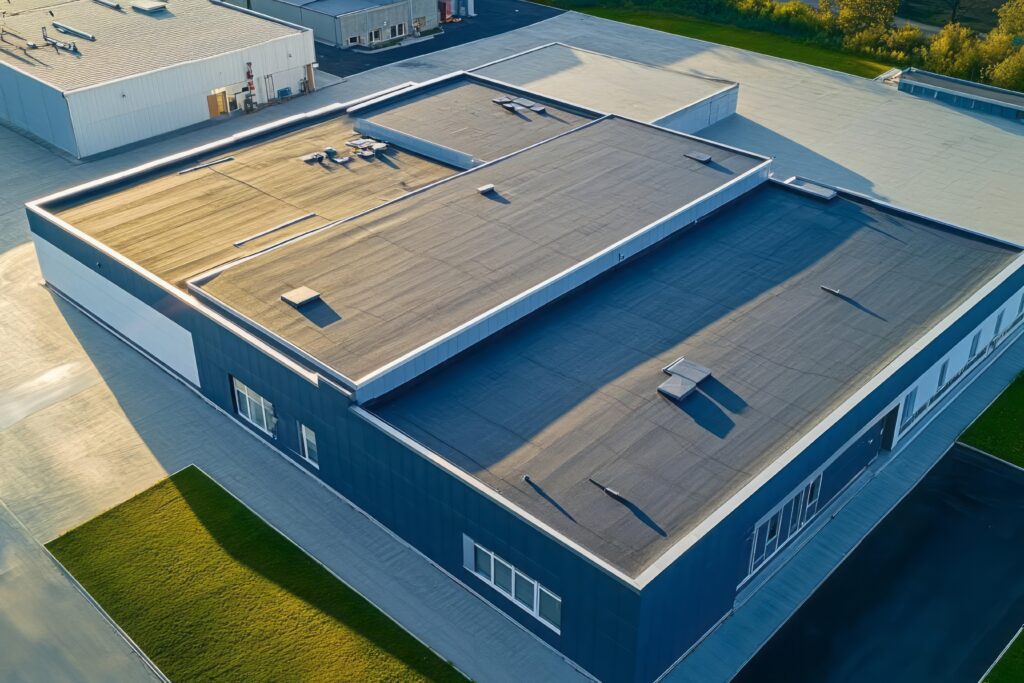
For commercial buildings and large-scale residential properties, the roof is more than just a cover—it is a critical mechanical platform. From HVAC units and telecommunications equipment to drainage systems, the roof requires frequent access for maintenance and inspection. A roof hatch is the primary gateway to this environment, providing a secure, weather-tight, and code-compliant transition from the interior to the rooftop.
At Masterpiece Roofing, we understand that a roof hatch is an intentional “penetration” in your roofing system. If installed correctly, it is a vital asset for safety and longevity; if ignored or poorly maintained, it can become a primary source of leaks and thermal loss.
Quick Answer: Roof Hatches Provide Safe, Code-Compliant Access
A roof hatch is a horizontal access door installed on a roof, typically accessible via a fixed ladder or ship’s stair. Its primary purpose is to allow personnel to reach the rooftop without the need for high-reach exterior ladders, which are often unstable and dangerous in inclement weather.
Why Roof Access Should Never Be Improvised
In the United States, OSHA (Occupational Safety and Health Administration) and the IBC (International Building Code) have strict regulations regarding roof access. Improvised methods—such as using portable ladders on uneven ground or climbing through windows—create immense liability for property owners. A dedicated roof hatch ensures that technicians can transition to the roof with both hands free (if using a proper safety railing) and provides a stable, predictable entry point that does not damage the roofing material.
What Is a Roof Hatch?
A roof hatch consists of a “curb” (the frame that sits on the roof deck) and a “cover” (the lid). These components are engineered to withstand extreme wind loads, heavy snow, and the constant expansion and contraction of the building.
Common Applications
- Commercial/Industrial: Factories, warehouses, and retail centers utilize hatches to allow facility managers to service rooftop HVAC units and exhaust fans.
- Safety & Fire Access: Some hatches are specifically designed as “smoke vents,” which automatically open in the event of a fire to release heat and noxious gases, helping to prevent structural collapse.
Residential vs. Commercial Use
- Commercial: Generally larger (standard 30″ x 36″ or 36″ x 36″) and constructed of heavy-gauge galvanized steel or aluminum. They often require integrated safety railings to comply with OSHA 1910.29(b).
- Residential: Often found in urban brownstones or modern “roof deck” homes. These may be smaller and are frequently integrated into the home’s aesthetics, sometimes featuring glass tops (skylight hatches) to allow natural light into the stairwell.
When Roof Hatches Are Required
Building Code Considerations
The International Building Code (IBC) generally requires permanent roof access for buildings four or more stories in height or for any building with mechanical equipment on the roof that requires periodic service. The code specifies that the path to the hatch must be clear and that the hatch itself must be easy to operate with one hand, allowing a technician to maintain balance on a ladder.
Maintenance and Emergency Access
Beyond simple code compliance, a hatch is a strategic tool. During a severe storm, being able to access the roof quickly to clear a blocked drain can prevent thousands of dollars in interior water damage. Furthermore, in certain high-rise configurations, roof hatches serve as secondary emergency egress points for occupants.
Roof Hatch Features That Matter
When selecting a hatch, the cheapest option is rarely the best for long-term performance.
Insulation and Weather Seals
Because the hatch sits at the highest point of the building, it is a prime location for heat loss. High-quality hatches feature:
- Polyisocyanurate (PIR) Insulation: Within both the curb and the cover to maintain the building’s R-value.
- EPDM Gaskets: Heavy-duty weatherstripping that prevents air infiltration and keeps moisture out even during driving rain.
- Thermal Breaks: Design features that prevent the transfer of cold from the exterior metal to the interior metal, reducing condensation.
Locking and Safety Features
- Automatic Hold-Open Arms: A safety mechanism that locks the cover in an open position at 90 degrees, preventing it from slamming shut due to wind while a person is in the opening.
- Interior and Exterior Latching: The ability to lock the hatch from the inside for security, while often allowing for an emergency release or padlock hasps for exterior maintenance crews.
- Integrated Railings: Modern safety standards often require a “Hatch Guard” or railing system around the perimeter to prevent falls when the hatch is open.
FAQs
Are roof hatches waterproof?
Yes, when installed by a professional roofing contractor. The hatch is “flashed” into the roofing system just like a chimney or a skylight. At Masterpiece Roofing, we ensure the roofing membrane is properly terminated at the hatch curb to create a seamless, watertight seal.
Do roof hatches affect roof warranties?
If a hatch is added after the roof is installed, it is considered a “modification.” To maintain your warranty, the installation must be performed by a certified roofing professional who understands how to tie the new flashing into the existing membrane without compromising the system’s integrity.
Can roof hatches be added to existing roofs?
Absolutely. This is a common “retrofit” project. We cut a precise opening in the existing roof deck, reinforce the structure if necessary, install the curb, and integrate the roofing material to ensure the new penetration is as secure as the rest of the roof.
Secure Your High-Level Access with Masterpiece Roofing
Whether you are managing a commercial facility or upgrading a residential property, safe and efficient roof access is a necessity, not an option. At Masterpiece Roofing, we specialize in the precision installation of high-performance roof hatches that meet all US building codes and OSHA standards. We don’t just “cut a hole”—we engineer a secure, insulated, and watertight portal that protects your building and the people who maintain it.
Is your roof access up to code? Contact Masterpiece Roofing today for a professional roof hatch assessment and installation estimate!