
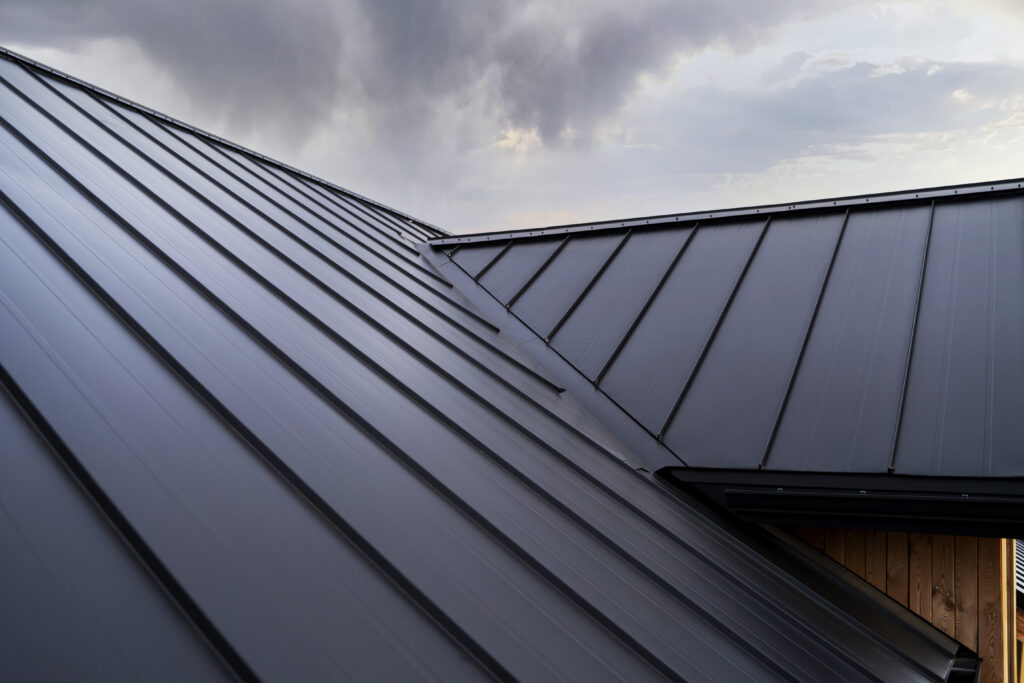
Low slope roofing is common on commercial buildings, industrial facilities, and modern residential architecture across the United States. Unlike steep roofs that rely on gravity and overlapping tiles or shingles to shed water quickly, a low slope roof system is defined by its subtle pitch and its reliance on continuous, watertight membranes to keep the building dry.
What Defines a Low Slope Roof
Understanding the pitch (or slope) of a roof is the first step in determining the appropriate roofing system.
Roof Pitch Explained (Ratio of Rise/Run)
Roof pitch is the measurement of vertical rise for every 12 inches of horizontal run. It is expressed as a ratio (e.g., 4:12), meaning the roof rises 4 inches vertically for every 12 inches it extends horizontally. The pitch directly determines how quickly water drains from the roof surface.
Typical Definition: Roofs Below About 2:12 to 3:12 Pitch
While true “flat” roofs (0:12) are rare and generally considered structurally flawed, low slope roofs are technically defined as any roof with a pitch of less than 2:12. Many building codes and roofing material manufacturers will also categorize pitches up to 3:12 as “low slope” when determining material suitability. Any roof at this shallow angle requires specialized, continuous waterproofing materials.
Difference from Flat and Steep Roofs
- Flat Roof: A theoretical 0:12 pitch, though most structures built today aim for a very minor slope (e.g., ¼-inch rise per foot of run) to direct water to drains.
- Low Slope Roof (0.5:12 to 2:12): Features a subtle angle; relies on watertight membranes and flashing details to manage water flow slowly toward drainage points.
- Steep Slope Roof (4:12 and greater): Features a significant angle; relies on gravity and overlapping materials (like shingles or tiles) to shed water rapidly.
Why Low Slope Roofs Need Special Materials
The most critical difference between steep and low slope systems is how they handle moisture and standing water.
Why Asphalt Shingles Are Not Recommended on Low Slope Areas
Standard asphalt shingles are designed for steep slopes (typically 4:12 or greater). Their performance relies on rapid water runoff before moisture has a chance to penetrate the overlaps between the shingles. On a low slope roof:
- Slow Drainage: Water moves slowly, staying on the surface longer.
- Capillary Action: Water can pool and be drawn up underneath the shingles via capillary action, leading to leaks, deck rot, and premature roof failure.
- Wind-Driven Rain: Heavy rain driven by wind can easily be forced under the shingle overlaps.
Common Materials: Membrane Roofs (EPDM, TPO, PVC), Modified Bitumen
Low slope applications require systems that form a continuous, monolithic waterproof layer across the entire roof deck.
- EPDM (Ethylene Propylene Diene Monomer): Often called “rubber roofing,” EPDM is a durable, synthetic rubber membrane that is typically black. It is highly resistant to temperature fluctuations and UV damage, offering excellent long-term performance.
- TPO (Thermoplastic Polyolefin) & PVC (Polyvinyl Chloride): These are thermoplastic membranes that are typically white or light-colored, offering excellent reflectivity and energy efficiency. They are hot-air welded at the seams, creating a strong, seamless, and monolithic seal that is ideal for preventing water intrusion.
- Modified Bitumen: This is an asphalt-based product reinforced with fiberglass or polyester, applied in layers. It is often a good choice for smaller commercial areas or residential garages and is typically installed either torch-applied, self-adhering, or hot-mopped.
Pros of Low Slope Roofs
Low slope roofing offers unique advantages, particularly in urban and modern residential settings.
Modern Minimalist Look
A low slope or nearly flat design is an essential feature of many contemporary architectural styles, providing clean lines and a streamlined aesthetic that complements modern building designs.
Suitable for Rooftop Equipment or Solar Installations
One of the most practical benefits is the increased usable space. Low slope roofs can easily accommodate heavy mechanical equipment (HVAC units), antennae, and extensive solar panel arrays without complex mounting structures. They also offer safer access for maintenance and inspection of these systems.
Typically Easier and Sometimes Cheaper Than Steep Roofs
While the materials themselves (like TPO or EPDM) can be expensive, the installation process for a large, unobstructed low slope area can sometimes be faster and less labor-intensive than detailing the complex angles and peaks of a steep-sloped, hip-and-valley shingle roof. This can sometimes translate into a lower overall installation cost, especially for large, square commercial buildings.
Challenges & Maintenance Considerations
Because low slope roofs manage water horizontally rather than vertically, they require diligent maintenance to prevent common issues.
Water Drainage and Ponding Concerns
The biggest threat to a low slope roof is ponding—water standing on the roof for more than 48 hours. Ponding water accelerates the degradation of all roofing materials, particularly the seams, and adds significant weight to the structure. This is often an indicator of structural deflection or an improperly designed drainage system.
Regular Inspection and Drainage Systems Needed
Low slope roofs require a proactive approach to maintenance. Annual inspections are crucial to check:
- Seams and Flashing: Look for separations or lifting at the edges, vents, and HVAC curbs.
- Drainage: Ensure gutters, scuppers (openings in the parapet wall), and internal drains are clear of debris (leaves, branches, dirt). Blocked drains can cause immediate ponding and leaks.
Importance of Professional Installation
Proper installation is paramount. Membrane welding (for TPO/PVC), material attachment, and, most importantly, the flashing details around penetrations (pipes, vents) must be executed flawlessly by experienced professionals. Poor detailing is the number one cause of low slope roof leaks.
FAQs
Can you install shingles on a low slope roof?
No, standard asphalt shingles should not be installed on slopes less than 4:12. For pitches between 2:12 and 4:12, a special underlayment system (like two layers of felt paper or a self-adhering modified bitumen underlayment) is required before shingles are applied, but even with this system, long-term performance may be compromised compared to a true membrane system.
How long do low slope roofs last?
The lifespan varies significantly by material, climate, and maintenance:
- EPDM: 20 to 30 years
- TPO/PVC: 15 to 25 years
- Modified Bitumen: 15 to 20 years
Longevity depends heavily on keeping the drainage clear and ensuring no long-term ponding occurs.
Is low slope roofing more expensive?
On a material-per-square-foot basis, high-performance membrane materials (TPO, EPDM, PVC) are typically more expensive than standard asphalt shingles. However, the complexity of the installation—or lack thereof—can affect the overall cost. For specialized installations, the expertise required for quality low slope work means the installed cost is comparable to, or sometimes higher than, a steep slope roof.
Secure Your Building’s Future: Expertise in Low Slope Systems.
Low slope roofing demands a unique skillset and specialized materials to guarantee watertight performance. Masterpiece Roofing provides certified installation and comprehensive maintenance plans for all major membrane and modified bitumen systems, ensuring your investment is protected from the elements.
Contact Masterpiece Roofing today for a detailed assessment and quote on your low slope project.