
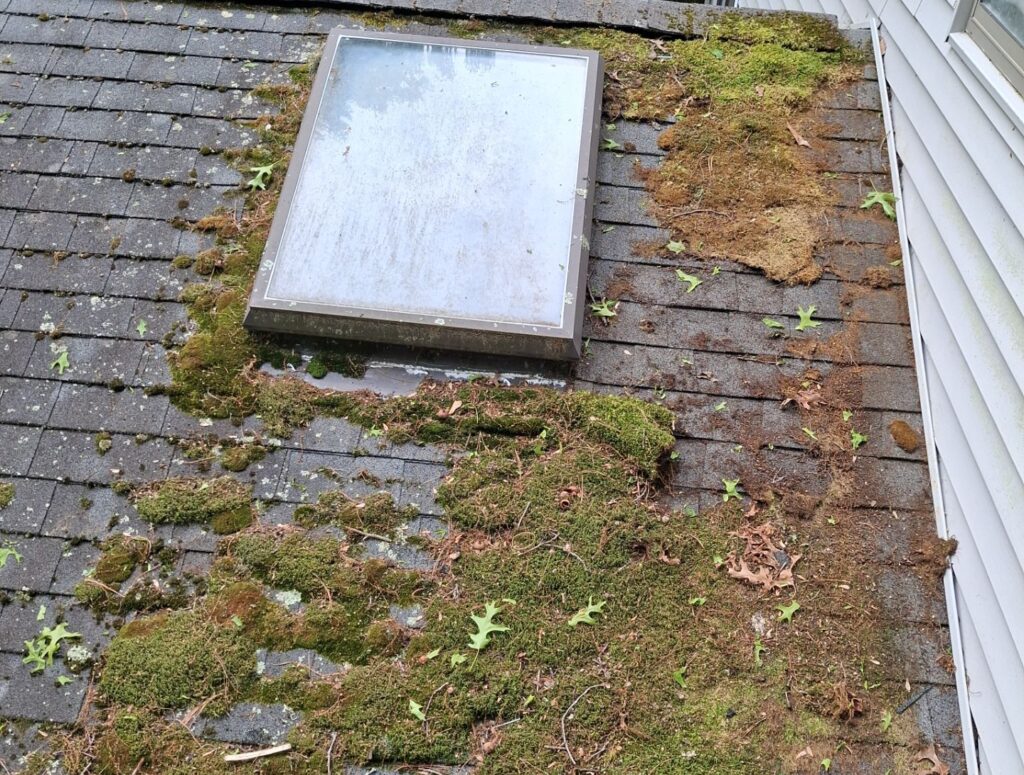
Moss, algae, and lichens are common biological growths that can appear on roofs, particularly in damp or humid climates. While often seen as merely an aesthetic issue, moss growth can severely impact the function and longevity of asphalt shingles and other roofing materials. When moss retains moisture against the roof surface, it causes premature material degradation and can potentially lift shingles, creating pathways for water infiltration.
Masterpiece Roofing provides professional moss treatment and prevention services to ensure your roof remains clean, dry, and performing as intended.
Why Moss Grows on Roofs
Moss requires two things to thrive on your roof: moisture and shade. Understanding these conditions is the first step toward effective prevention.
Shady, Damp Areas Encourage Moss Growth.
Moss spores are carried by the wind and adhere easily to shingle granules. Once established, moss acts like a sponge, retaining moisture for extended periods. The organism thrives best where:
- Sunlight is Limited: Shady sections of the roof (often the north side or areas shaded by large trees) dry out slowly after rain or morning dew.
- Moisture is Trapped: The overlapping nature of shingles creates pockets that hold organic debris, giving moss a fertile substrate to root into.
Overhanging Branches, Poor Roof Ventilation, Moisture Traps
- Overhanging Branches: Trees that hang directly over the roof not only deposit debris (leaves, needles, twigs) but also block sunlight and restrict airflow, keeping the roof surface damp.
- Poor Roof Ventilation: If the attic is poorly ventilated, trapped heat causes condensation on the underside of the sheathing, which contributes to a chronically moist roof deck environment, compounding the problem.
Effective Prevention Methods
Prevention is far easier and safer than removal, relying on creating an environment that is too dry or chemically hostile for moss to flourish.
Install Copper or Zinc Strips at Ridge Line.
This is the most effective long-term, passive prevention method. Copper or zinc metals are highly toxic to moss, algae, and lichens. When rain washes over these strips, metallic ions are released and flow down the roof surface.
- Mechanism: These metallic salts create an inhospitable, non-toxic environment that prevents biological growth from taking hold on the roofing material below.
- Installation: Strips are installed horizontally just below the ridge cap, ensuring the entire face of the roof slope is covered by the runoff path.
Trim Trees and Improve Sun Exposure.
If possible, trim back any tree branches that directly overhang the roof. Increasing the sunlight exposure and airflow across the roof surface will ensure the shingles dry quickly after rain or dew, which dramatically limits the moss’s ability to take root and grow.
Maintain Clean Roof Surface, Remove Debris & Moss Early
Regularly clearing leaves, pine needles, and sticks from the roof valleys and the areas behind chimneys or vents prevents the buildup of organic debris that moss uses as its growing medium. Early, gentle removal of any new moss growth can stop an infestation before it becomes severe.
Safe Removal Options
Never use abrasive methods, as they will strip the protective granules from asphalt shingles, drastically shortening the roof’s lifespan.
Avoid High-Pressure Washing (May Damage Shingles)
Do not use a power washer on your roof. High-pressure water blasts the protective ceramic granules off asphalt shingles, exposes the asphalt to UV rays, and can force water underneath the shingles, causing structural leaks. This will void your shingle warranty.
Use Soft Wash or Safe Chemical Treatments
The safest methods involve a soft wash using a garden hose pressure combined with chemical agents:
- Moss Killers: Commercial products often contain potassium salts of fatty acids, which effectively kill moss.
- Bleach Solution: A diluted solution of chlorine bleach (e.g., $1$ part bleach to $4$ parts water) can be sprayed onto the affected areas. After application, allow the solution to sit for 15–30 minutes, then rinse gently with a garden hose. The dead moss will naturally slough off over time with rain. Caution: Ensure nearby plants and gutters are protected from runoff.
FAQs
“Is moss just cosmetic?”
No, moss is a functional problem. When moss grows, it lifts the shingle tabs and holds a pool of water directly against the roof surface. This constant dampness can accelerate wood rot in the decking, make shingles brittle in winter (leading to cracking), and reduce the effectiveness of the protective granules, accelerating the aging process of the roof.
“How often should I inspect for moss?”
You should visually inspect your roof for moss and debris buildup at least twice a year: once in the late spring after heavy winter moisture, and again in the late fall before winter sets in. Pay special attention to north-facing slopes and areas near trees.
“Can I apply moss inhibitor myself?”
You can, but extreme caution is advised. Climbing on a roof is inherently dangerous, and applying chemicals incorrectly can damage the shingles or harm landscaping. For effective and safe application, particularly for the installation of zinc or copper strips, it is best to consult a professional roofer who has the safety equipment and knowledge to ensure proper treatment coverage without damaging the roof or voiding your warranty.
Protect your roof’s granules and structural integrity from invasive growth.
Contact Masterpiece Roofing today for professional moss treatment and installation of permanent copper or zinc prevention strips.