
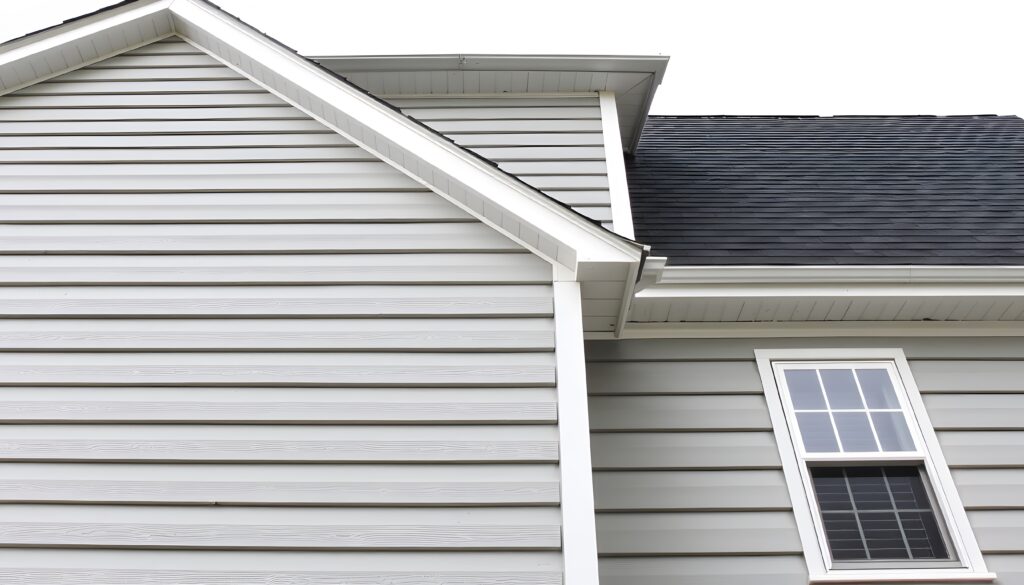
Replacing the siding is one of the most impactful exterior remodeling projects, offering immediate aesthetic improvements, enhanced curb appeal, and significant long-term protection for your home’s structure. The total cost of the project depends on the square footage of the walls and the material you select, as installation complexity varies widely between vinyl, fiber cement, and wood.
Masterpiece Roofing provides clear, itemized quotes to help you choose the best cladding solution that meets your budget, durability, and aesthetic goals.
Typical Cost Ranges by Material
The material cost, coupled with its specific labor demands, determines the cost per square foot for a completed siding project. The following costs are general ranges for installation (material and labor) per square foot:
Siding Price per Sq Ft (Installed)
| Material Type | Installed Cost Per Sq Ft (Approx.) | Key Characteristics |
| Vinyl Siding | $3.00 – $7.00 | Most cost-effective, low maintenance, excellent weather resistance. |
| Engineered Wood | $5.00 – $10.00 | Appearance of natural wood, good durability, lower maintenance than wood. |
| Fiber Cement (e.g., HardiePlank) | $7.00 – $15.00 | Highly durable, fire-resistant, excellent wood aesthetics, moderate maintenance. |
| Wood Siding (Cedar, Pine) | $8.00 – $20.00 | Premium look, high maintenance (painting/staining), high installation skill required. |
| Metal Siding (Steel, Aluminum) | $9.00 – $18.00 | Very long life, highly resistant to insects and fire, can dent. |
Example: Mid-range Siding for a 2,000 Sq Ft House $\approx\$17,200$ ($\approx\$8.60/\text{sq ft}$)
For a typical US home requiring approximately 1,800 to 2,200 square feet of wall coverage, a high-quality, mid-range material like fiber cement or premium engineered wood often results in a total project cost ranging from $15,000 to $25,000. This estimate includes professional installation, standard trim work, and waste disposal.
What Factors Drive Siding Cost?
The installed cost is driven by variables unique to your home’s structure and regional economy.
Material Type, Removal of Old Siding, Insulation, Architectural Complexity
- Material: Fiber cement and wood require more intensive, specialized labor than vinyl because of their weight, cutting difficulty (fiber cement generates silica dust), and painting requirements.
- Old Siding Removal: The cost to remove and dispose of existing siding (especially asbestos or lead-painted wood) adds significantly to the project price.
- Insulation Upgrade: Installing rigid foam insulation board or house wrap beneath the new siding enhances energy efficiency but increases labor and material costs.
- Architectural Complexity: Homes with multiple stories, many window/door cutouts, dormers, peaks, and gables require intensive, customized trim work, leading to much higher labor costs per square foot compared to simple, flat walls.
Labor Rates in Your Region
Labor rates are the largest single variable. A high-demand, metropolitan area will have higher labor costs than a smaller market. Additionally, a specialized contractor capable of installing high-end materials like cedar or complex metal panels will charge more than a crew focused solely on basic vinyl.
How to Estimate Your Project
A reliable project estimate requires accurate wall area measurement and accounting for all required supplementary materials.
Use Cost per Square Foot $\times$ Wall Area + Extras
- Calculate Wall Area: Obtain the total square footage of all wall surfaces to be covered.
- Apply Cost Range: Multiply the total area by the installed cost range for your desired material.
- Add Extras: Account for trim pieces (corner posts, window/door J-channels, fascia wrap), structural repairs (if underlying rot is found), and disposal fees. These extras can easily add 15% to 30% to the material-only estimate.
Get Multiple Quotes
Obtain detailed, itemized quotes from at least three different licensed contractors. Ensure all quotes specify:
- The exact brand and grade of the material used.
- The type of house wrap and flashing included.
- A line item for the removal and disposal of the old siding.
FAQs
“Does siding replacement add value to my home?”
Yes, exterior siding replacement is consistently one of the best remodeling investments for return on investment (ROI). New, attractive siding dramatically boosts curb appeal (essential for selling) and provides a significant return, often recovering 70% to 85% of the cost upon resale, depending on the material and region.
“What’s cheaper: vinyl or fiber cement?”
Vinyl siding is significantly cheaper than fiber cement. Vinyl has a lower material cost and is much faster to install (lower labor cost). Fiber cement is a premium material that is heavy, requires specialized cutting tools, and often needs painting after installation, making it substantially more expensive on an installed cost per square foot basis.
“How often should siding be replaced?”
The replacement frequency depends entirely on the material:
- Vinyl: 20 to 40 years.
- Fiber Cement: 50+ years (requires repainting every 10–15 years).
- Wood: 20 to 40 years (requires repainting every 5–10 years).
- Metal: 40 to 75 years.
Replacement is necessary when the siding fails to protect the wall (i.e., cracks, rot, or severe warping) or when the aesthetic benefits have diminished past the point of repair.
Invest in quality cladding for lasting durability and curb appeal.
Contact Masterpiece Roofing today for a detailed, no-obligation estimate on your next siding project.