
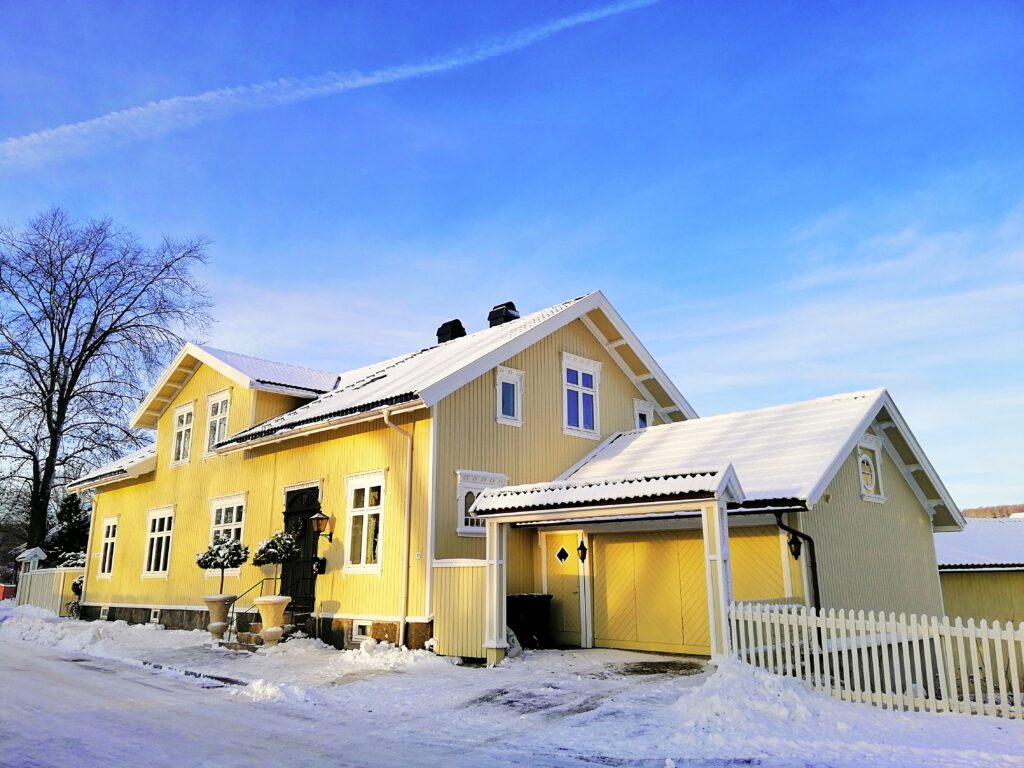
Ice dams are a major risk to homes in cold climates, forming large ridges of ice at the edge of the roof eaves. These formations are not just a nuisance; they are a sign of heat loss and can cause severe water damage to the roof deck, insulation, and interior walls. Effective prevention requires addressing the root cause: uneven roof temperature.
Masterpiece Roofing provides comprehensive solutions, focusing on insulation and ventilation improvements, to create a “cold roof” that minimizes ice dam risk.
What Are Ice Dams and Why They Form
Ice dams are a result of a temperature imbalance, where heat escapes the living space and melts snow on the upper roof, causing water to refreeze lower down.
Heat Loss from Attic Melts Snow, Refreezes at Eaves
The process begins when the temperature of the upper roof deck rises above freezing due to escaped attic heat. This melts the snow, and the resulting water runs down the roof slope until it hits the eaves—the overhang that is outside the insulated, warm zone of the house. Since the eaves are colder, the water refreezes, forming a barrier of ice. This barrier causes subsequent meltwater to pool and back up under the roofing material.
Improper Insulation, Ventilation, and Attic Leaks
The core causes of uneven heat distribution are:
- Poor Insulation: Insufficient insulation allows heat from the living space to easily transfer into the attic.
- Air Leaks (Air Sealing): Unsealed penetrations (such as wiring holes, plumbing vents, and chimney gaps) allow warm, moist air from the home to leak directly into the attic. This is the single largest contributor to premature snow melt.
- Inadequate Ventilation: Without proper airflow from the soffit (intake) to the ridge (exhaust), the warm air trapped in the attic cannot escape, superheating the underside of the roof deck. [Diagram illustrating a cross-section of a roof/attic showing heat loss and ice dam formation at the eave]
Risks of Ice Dams
The damage caused by ice dams is often far more extensive than homeowners realize.
Water Back-up Under Shingles, Leaks Inside Home
When the ice dam forms, it holds a pool of water behind it. This standing water penetrates the roof system via capillary action, working its way underneath the shingles and the underlayment. The water then soaks the roof decking and eventually leaks into the house, causing:
- Ceiling Stains and Damage
- Damage to Wall Paint and Drywall
- Ruin of Attic Insulation
Structural Damage and Mold Growth
Chronic ice damming can lead to:
- Roof Deck Rot: Repeated wetting and drying of the sheathing can cause the wood to soften and rot, compromising structural integrity.
- Mold and Mildew: Persistent moisture trapped in the attic space and wall cavities leads to harmful mold growth.
- Gutter Damage: The sheer weight of the ice dam can bend, pull, or completely tear gutters away from the fascia board.
How to Prevent Ice Dams Effectively
Effective prevention is achieved by making the roof deck uniformly cold—the same temperature as the outside air—so that snow does not melt prematurely.
Improve Attic Insulation and Air Sealing
This is the foundational step. The goal is to stop heat from entering the attic in the first place.
- Air Seal: Seal all air leaks leading from the living space to the attic (around exhaust fans, light fixtures, pipes, and access hatches).
- Insulate: Bring the insulation level up to the recommended R-value (R-49 to R-60 is common in northern climates), ensuring a thick, continuous blanket over the attic floor.
Ensure Proper Roof Ventilation and Soffit/Fascia Clearances
The attic needs to be able to breathe. Install a balanced system of intake vents (in the soffits/eaves) and exhaust vents (at the ridge or gables). It is crucial to use baffles to prevent insulation from blocking the airflow path at the eaves.
Use Roof-Safe Ice & Water Barrier Under Eaves
When replacing the roof, a professional contractor should install a self-adhering ice and water barrier—a rubberized membrane—under the shingles along the entire roof perimeter, extending at least 2 feet past the interior wall line. This acts as a secondary waterproof layer to protect the deck if water backs up.
When to Get Professional Help
While a homeowner can improve insulation and air seal, addressing persistent ice dam issues often requires expert assessment.
If Ice Dams Persist Despite Mitigation
If you have sealed air leaks and increased insulation but still suffer from severe ice dams, the issue may be a complex ventilation problem or a structural air channel that requires a roofer to diagnose and fix from the exterior.
Gutter and Downspout Checks
Ensure gutters are clean before winter. Clogged gutters prevent meltwater from flowing out and instead trap it, forming the anchor point for the ice dam. Masterpiece Roofing can perform pre-winter gutter cleaning and check downspout function.
Roof Snow Removal Practices
Avoid attempting to chip away at large ice dams, as this risks severe damage to the shingles. If necessary, hire a professional with specialized steam equipment to safely remove the ice without damaging the roof surface.
FAQs
“Is it safe to remove ice dams myself?”
No, it is highly dangerous. Climbing onto icy roofs poses a severe fall risk. Furthermore, using axes, hammers, or large amounts of rock salt can cause catastrophic damage to the shingles, flashing, and underlying decking. If you need immediate removal, hire a contractor who uses low-pressure steam to melt the ice safely.
“Do metal roofs stop ice dams?”
No, metal roofs do not prevent ice dams. They still allow snow to melt when heat escapes the attic. However, because metal is smooth, snow and ice often slide off before the ice dam can fully form, reducing the risk of water back-up. Critically, a metal roof still requires excellent attic insulation and ventilation to function correctly.
“When should I call a roofer for ice dam risk?”
You should call a roofer before winter arrives to schedule a professional inspection of your attic ventilation system and to check the condition of your eaves and flashings. The best time to address the root causes of ice dams (insulation and ventilation) is during the warm months when roof work is easiest.
Don’t wait for winter damage to compromise your home.
Contact Masterpiece Roofing today for a comprehensive winter readiness and ice dam prevention assessment.