
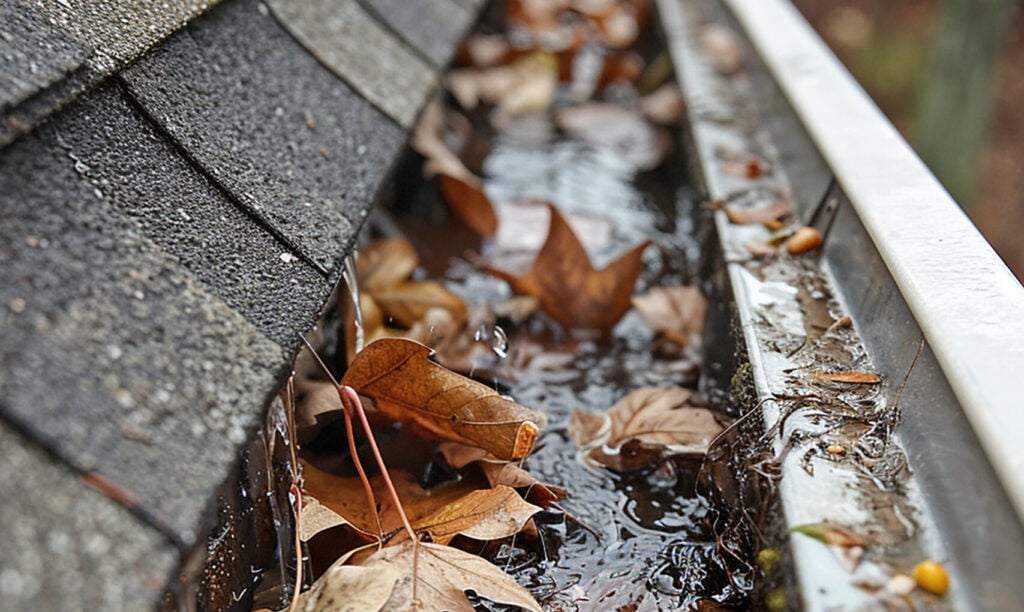
Clogged gutters are one of the most common and easily preventable causes of expensive home damage. When leaves, twigs, shingle granules, and other debris accumulate, they turn your gutter system into a non-functioning trough. Instead of diverting rainwater safely away, a clogged gutter redirects thousands of gallons of water in the places you least want it—directly onto your roofline and around your home’s foundation. This guide outlines the severe risks posed by a blocked drainage system.
The Hidden Dangers of Clogged Gutters
The moment a gutter clogs, it stops performing its job, and the immediate damage begins at the roof’s edge and the exterior walls.
Water Backup Leads to Roof Leaks and Rot
When water cannot flow down the downspout, it pools inside the gutter channel, where it causes stress on the entire roofing perimeter.
- Ice Damming Risk: In colder climates, standing water in a clogged gutter easily freezes. As temperatures fluctuate, the ice expands and pushes up beneath the roof’s edge (the shingles and underlying drip edge). This process forms a devastating ice dam, which forces melting snow water underneath the roofing materials and into the attic and interior wall cavities, resulting in immediate leaks and saturated insulation.
- Edge and Decking Rot: Even without freezing, continuous standing water accelerates the decay of the wooden fascia board and the underlying roof decking. The persistent moisture creates an environment where wood rot and mildew thrive, compromising the structural integrity of the roof structure closest to the eaves.
Overflow Damages Siding, Fascia, and Soffits
When the volume of rain exceeds the gutter’s capacity, the water spills over the front or back of the channel, streaming down the side of the house.
- Fascia and Soffit Deterioration: Overflow that runs down the back of the gutter directly saturates the fascia and soffit. This repeated soaking leads to paint peeling, wood rot, and creates damp, soft entry points for pests like carpenter ants, wasps, and rodents seeking shelter in your attic space.
- Siding and Window Damage: The stream of overflowing water continually soaks the home’s siding, accelerating degradation of materials like wood and causing stains on brick or stucco. Furthermore, this intense, localized water flow can pool on window sills and ledges, compromising the seals and leading to moisture penetration around the window frames.
How Gutter Problems Affect Your Entire Home
The consequences of clogged gutters extend far beyond the immediate roof perimeter, threatening the health and structural stability of the entire property.
Foundation Cracks from Poor Drainage
The foundation is designed to keep water away, but clogged gutters actively direct water right to its base, leading to the most costly type of repair.
- Soil Saturation and Pressure: A downspout that is blocked or disconnected dumps concentrated runoff at the base of the foundation. This oversaturation increases the water content in the soil, which exerts immense hydrostatic pressure against the basement and crawlspace walls.
- Cracking and Settling: Over time, this pressure can lead to lateral movement, causing the foundation to crack, bow inward, and shift. The resulting issues manifest inside the home as basement flooding, leaky walls, and structural settling—all indicators that the gutter system has failed to protect the base of your house.
Mold Growth and Interior Wall Damage
Excess moisture is the primary ingredient for mold, which can affect the home’s air quality and damage interior finishes.
- Hidden Mold in Walls: When roof leaks or siding overflow saturates the wall structure, mold often begins to grow unseen within the wall cavities. This is a significant health hazard, compromising indoor air quality and requiring extensive, professional remediation.
- Interior Water Stains: Water that penetrates the roof or walls due to clogged gutters typically leaves visible signs: brown or yellow stains on ceilings, bubbling paint on interior walls, or damp spots near the upper floor windows. These stains mean the system has been compromised, and the problem is actively spreading within the home.
Warning Signs to Watch For
The good news is that gutter problems rarely occur without warning. Homeowners can often spot the signs of clogging and failure without climbing a ladder.
Overflowing Water During Rainstorms
This is the most obvious and critical sign that your gutters are completely blocked and water is being misdirected.
- Waterfalls Over the Edge: If you see water sheeting or cascading over the lip of the gutter instead of flowing out the downspout, the gutter is full of debris and unable to function.
- Downspout Trickle: During heavy rain, if only a small trickle of water is coming out of the bottom of the downspout, but the gutter above is overflowing, the downspout pipe itself is severely clogged and needs immediate clearing.
Sagging Gutters or Visible Debris Buildup
Physical stress on the gutter system is an immediate indicator of a weight problem caused by blockages.
- Visible Debris: From the ground, if you can see leaves, shingle granules, or plant growth emerging from the top of the gutter channel, it is clogged and heavy.
- Gutter Separation: A gutter that appears to be pulling away from the fascia board or has a noticeable downward bow (sagging) is likely holding excessive weight from trapped water and debris. This means the hangers have failed and the gutter is at risk of falling entirely.
How to Prevent Clogs and Water Damage
Preventative maintenance is significantly less expensive and time-consuming than repairing the damages caused by a single, severe gutter failure.
Clean Gutters Twice a Year
Consistent, seasonal cleaning is the most effective way to eliminate debris and ensure year-round protection.
- Ideal Timing: Schedule cleaning immediately after the majority of leaves have fallen in the late fall or early winter. This prevents ice from forming on trapped debris.
- Spring Maintenance: A second cleaning in the early spring addresses wind-blown debris, nests, and any shingle granules shed over the winter, preparing the system for the heavy rainfall months.
Install Gutter Guards and Schedule Professional Inspections
For long-term protection, high-quality gutter guards minimize the need for frequent cleaning and maintain the health of your roofline.
- Debris Exclusion: Gutter guards are designed to filter out leaves, pine needles, and other large debris, drastically reducing the chances of a clog and ensuring water flows freely.
- Annual Inspection: Even with guards, professional, annual inspections are critical. Roofing experts can assess the condition of the guards, check the gutter pitch, and, most importantly, examine the fascia, soffit, and drip edge for early signs of water damage that may be hidden behind the gutter itself.
Don’t let a small pile of leaves turn into a massive repair bill for your roof or foundation. Proactive maintenance is the cornerstone of responsible home ownership.
Contact Masterpiece Roofing today for a professional gutter cleaning and inspection, or to inquire about a seamless gutter guard installation—protecting your entire home from top to bottom!