
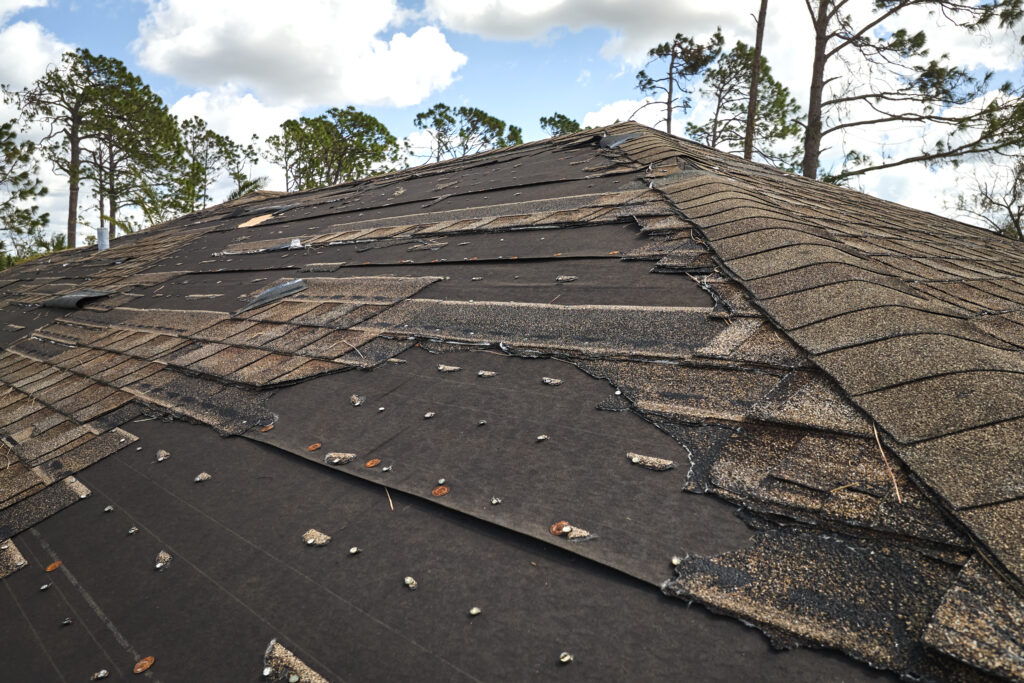
Hailstorms can be a homeowner’s worst nightmare, causing significant and often unseen damage to your roof. While some hail damage might seem minor at first, ignoring it can lead to serious and costly problems down the line. It’s crucial for every homeowner to understand how to identify hail damage and what steps to take to protect their investment.
How Hail Damages a Roof
Hail causes damage through blunt force impact, which can affect roofing materials in several ways, compromising their ability to protect your home.
Shingle cracks and dents
When hailstones hit your shingles, the impact can fracture the fiberglass mat or asphalt layer beneath the surface. This creates small, often crescent-shaped cracks or dents that can be difficult to spot from the ground. While a single dent may not cause an immediate leak, it weakens the shingle’s structure, making it vulnerable to future damage from wind, sun, and rain.
Granule loss and weakened protection
The granules on asphalt shingles are not just for color; they are a critical layer of protection against the sun’s UV rays. Hail impact can dislodge these granules, leaving the underlying asphalt exposed. Over time, the exposed asphalt will be weakened by the sun, causing the shingle to become brittle and prone to cracking. This accelerates the aging process of the roof and significantly reduces its lifespan.
Signs of Hail Damage
Identifying hail damage can be tricky, as it’s not always obvious. You’ll need to look for a combination of signs on your roof and other parts of your property.
Visible dents and bruises
The most obvious signs of hail damage are circular or crescent-shaped dents and bruises on your shingles. These marks may appear as black spots where the granules have been knocked off. You may also see damage on vents, skylights, and metal flashing, which can appear as dents or pockmarks.
Damage to gutters and siding
Hailstones often hit other parts of the home besides the roof. Inspect your gutters, downspouts, and siding for dents and chips. If you have any wood siding or decks, look for chips in the paint or wood. A good way to check is to look at your air conditioning unit’s metal fins—if they are dented, it’s a strong indicator of hail damage.
Why You Shouldn’t Ignore Hail Damage
Hail damage is often called a “silent killer” of roofs because it can go unnoticed for a long time. However, even minor damage can lead to major problems if not addressed promptly.
Risk of leaks
The tiny cracks and missing granules left by hail may not cause a leak immediately, but they create weak points in your roof’s defense. Over time, water can seep through these compromised areas, leading to leaks, rot, and mold growth in your attic or ceiling.
Reduced roof lifespan
Ignoring hail damage can dramatically shorten your roof’s lifespan. What could have been a few minor repairs can turn into a full roof replacement years earlier than expected. This can lead to unexpected and significant costs for homeowners.
Repair and Replacement Options
The best course of action depends on the extent and severity of the hail damage. An inspection by a professional roofing contractor is the only way to accurately assess the damage.
When repairs are enough
For minor, localized hail damage, repairs may be sufficient. A contractor can replace individual damaged shingles or sections of the roof. This is a more cost-effective solution when the damage is limited and doesn’t compromise the overall integrity of the roof.
When replacement is necessary
If the hail damage is widespread and covers a large portion of the roof, a full replacement may be the only option. Insurance companies typically approve a full replacement when the damage is too extensive to be effectively repaired. A new roof ensures your home is fully protected and often comes with a new warranty.
Worried about hail damage on your roof? Don’t wait until it’s too late. Masterpiece Roofing offers free, no-obligation roof inspections and works with your insurance to ensure a seamless repair or replacement. Contact us today for a professional assessment!