
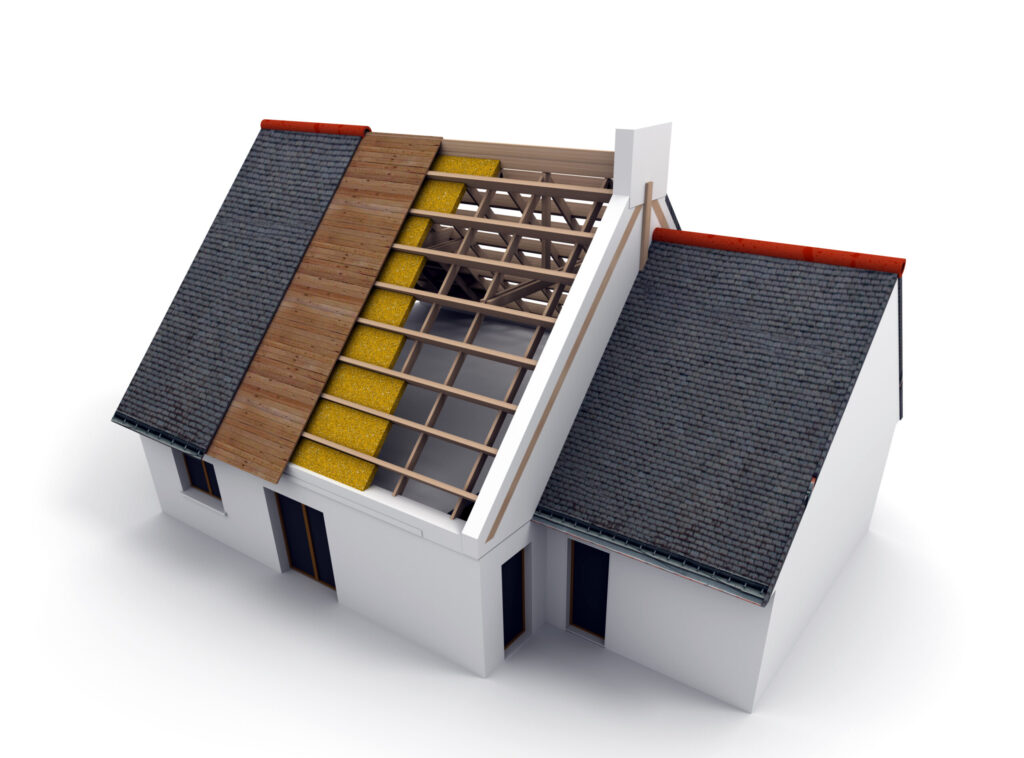
A residential roofing system is far more complex than just the visible shingles. It is a sophisticated assembly of multiple distinct layers, each engineered to perform a specific function, from structural support to primary waterproofing and energy management.
This guide breaks down the essential components, explaining why each layer is crucial for the longevity, durability, and performance of your home’s protection system.
The Main Layers of a Roof
A modern, professionally installed roofing system typically consists of five primary layers, working synergistically to create a robust barrier against the elements.
Roof Decking
The roof deck (or sheathing) is the foundational layer, often overlooked because it is entirely covered. It is securely fastened to the rafters and forms the continuous surface for the rest of the roof materials.
- Materials: Typically constructed from Plywood or Oriented Strand Board (OSB) in modern homes. Older homes may use spaced plank boards.
- Function: Provides the structural base, dictates the roof’s weight-bearing capacity, and provides the surface necessary to nail all subsequent layers.
Underlayment (Felt, Synthetic, Ice & Water Shield)
The underlayment is the crucial water-resistant or waterproof barrier installed directly over the deck. It is the second line of defense against leaks, protecting the deck before shingles are applied and offering protection if shingles are damaged or blown off.
- Felt Paper: Traditional, asphalt-saturated paper (often 15 lb or 30 lb). Water-resistant but not fully waterproof.
- Synthetic Underlayment: A lighter, stronger, and more tear-resistant non-asphalt option. It provides superior water resistance and lies flatter than felt, improving shingle installation.
- Ice & Water Shield: A self-adhering, fully waterproof membrane used primarily at vulnerable areas: eaves, valleys, around chimneys, and vents. Building codes in cold climates often mandate this product along the drip edge to protect against water backup caused by ice dams.
Starter Shingles
Starter shingles are a foundational row of adhesive-backed tabs or strips installed along the rake edges and the eaves before the main field shingles.
- Function: They ensure the first course of visible shingles is securely adhered and properly aligned. Crucially, they provide a sealed, double layer at the critical overhang points, preventing water from traveling underneath the primary shingles at the roof’s edge.
Shingles or Roofing Material
This is the outermost, visible layer and the primary line of defense against rain, UV radiation, and wind.
- Asphalt Shingles: The most common residential roofing material in the US, available in 3-tab (flat, economical) or architectural/laminated (thicker, multidimensional, better wind resistance).
- Other Materials: Clay or concrete tiles, metal panels, or wood shakes, depending on style and local climate requirements.
Ridge Caps & Ventilation
The ridge is the horizontal peak where two roof planes meet. This area requires specialized components that finish the look and perform a vital function: attic venting.
- Ridge Caps: Pre-formed, thicker, or specialized shingles designed to cover the ridge line, providing protection against water intrusion at the roof’s highest point.
- Ridge Vents: Installed beneath the ridge cap, these are continuous openings that allow hot, moist air to escape the attic space, completing the essential process of attic ventilation.
Why Each Layer Matters
The performance of a roofing system is only as strong as its weakest layer. Every component serves an engineered purpose.
Waterproofing and Moisture Defense
The system employs a layered defense mechanism:
- Primary Defense: The shingles shed the bulk of the water.
- Secondary Defense (Critical): The underlayment and ice & water shield manage any water that penetrates the primary shingle layer (e.g., wind-driven rain, or melting ice). Without this secondary layer, water would soak the deck immediately, leading to leaks and rot.
Structural Support
The roof deck provides structural rigidity, connecting the rafters and distributing the load across the structure. This is especially vital for:
- Wind Resistance: A properly nailed deck prevents the entire structure from shifting or failing under high wind loads.
- Weight Management: It supports the weight of heavy roofing materials (like tiles) and environmental loads (like heavy snow accumulation).
Energy Efficiency and Ventilation
An often-misunderstood function of the roof system is regulating attic temperature and humidity:
- Proper Ventilation (Soffit and Ridge Vents): This creates a continuous airflow system. Cool air is drawn in through the soffit vents (low) and hot air escapes through the ridge vents (high).
- Benefits: This movement of air prevents heat buildup in the summer (reducing A/C costs) and prevents moisture condensation in the winter (which causes decking rot and insulation saturation). A healthy deck extends the life of the shingles by keeping them cooler.
Common Mistakes in Layer Installation
Skipping or improperly installing any one layer can drastically reduce the roof’s lifespan and void manufacturer warranties.
Missing Ice & Water Shield
In climates prone to freezing temperatures, omitting the self-adhering ice and water shield along the eaves is a severe error. Ice dams form when heat melts snow, which then freezes again at the cold, unheated eaves. Without the waterproof membrane, the standing ice forces water backward and underneath the shingle layers, where it enters the home structure, leading to devastating interior leaks and soffit damage.
Incorrect Ventilation That Leads to Premature Aging
If the ratio of intake (soffit) vents to exhaust (ridge, gable, or box) vents is incorrect, the system will not draw air efficiently. Insufficient ventilation causes the attic to overheat and traps moisture, which leads to:
- Premature Shingle Deterioration: Excessive heat cooks the shingles from below, causing the protective granules to fall off prematurely.
- Warping Decking: Trapped moisture causes the wood deck to expand and warp.
Poor Underlayment Overlap
The underlayment must be installed with precise horizontal overlap (typically 2 to 4 inches, depending on the material and roof pitch) and must overlap vertically at all seams. Incorrect or inadequate overlap creates unprotected channels where wind-driven rain or water from a cracked shingle can easily bypass the underlayment and hit the deck directly.
FAQs About Roof Layers
“How many layers of shingles are allowed?”
Building codes generally permit a maximum of two layers of asphalt shingles on residential roofs. Installing a third layer is prohibited because the accumulated weight can overstress the structure, and it often voids any remaining manufacturer warranties. It is always recommended, and often required by code during replacement, to perform a complete tear-off down to the deck.
“Do all roofs need underlayment?”
Yes, virtually all residential roofing systems in the US require underlayment. Even if local codes permit a single-layer installation (which is rare), the underlayment is critical for secondary moisture protection. It also protects the deck from the elements during the installation process itself, ensuring a dry surface when the shingles are finally applied.
“What’s the purpose of ridge vents?”
Ridge vents are the exhaust component of your roof’s ventilation system. Their purpose is to provide a continuous, uniform opening along the roof’s peak, allowing the superheated, buoyant air (and moisture) that accumulates in the attic to escape. This constant flow of air, balanced by intake vents at the eaves, regulates attic temperature, prevents moisture damage to the deck, and extends the life of the shingles.
Ready to ensure every layer of your roofing system is installed correctly and efficiently?
Contact us today for a full, no-obligation roof inspection. We will assess the structural health, ventilation, and integrity of your entire system to guarantee your home is protected from the deck up!